Salt Cathedral and walking around Bogota’s districts
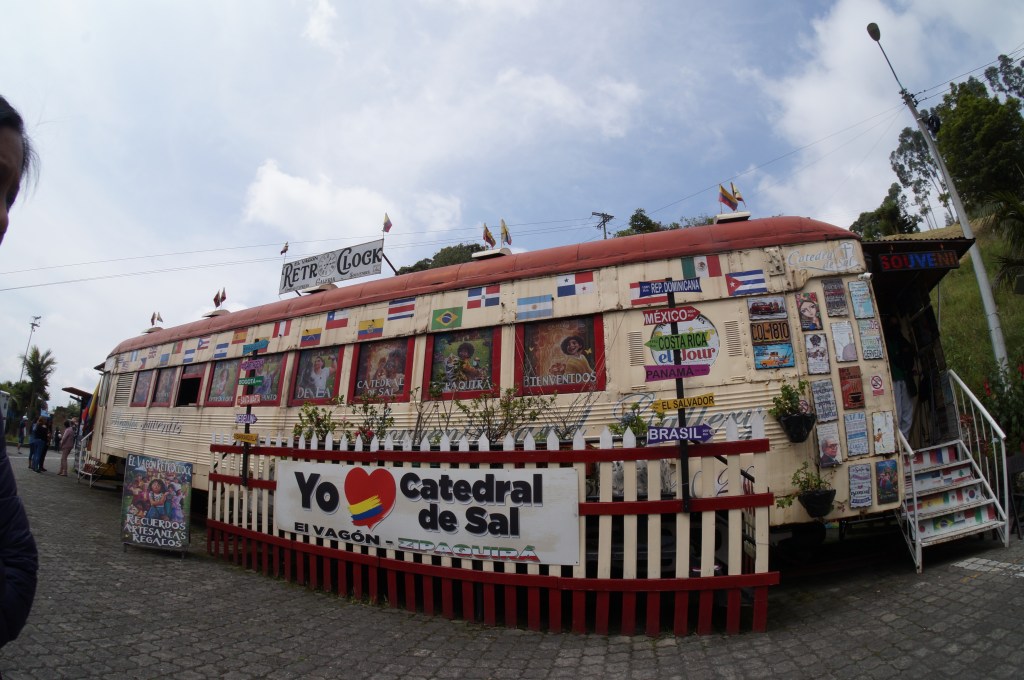
MONDAY MARCH 20, Bogota, Colombia
We started with breakfast at our hotel and jumped into a different van, different driver, heading off to one of 3 underground Salt Cathedrals that exist in the world. This one is located in Zipaquirá around an hour north of Bogota, 600 feet underground.
Initially, miners prayed in a small sanctuary built inside the caverns. There they would pray to the Virgin of the Rosary of Guasà, the patron saint of miners, to protect them from toxic gases, explosions and other accidents. That first sanctuary was built in the 1930s.
(NPR article)

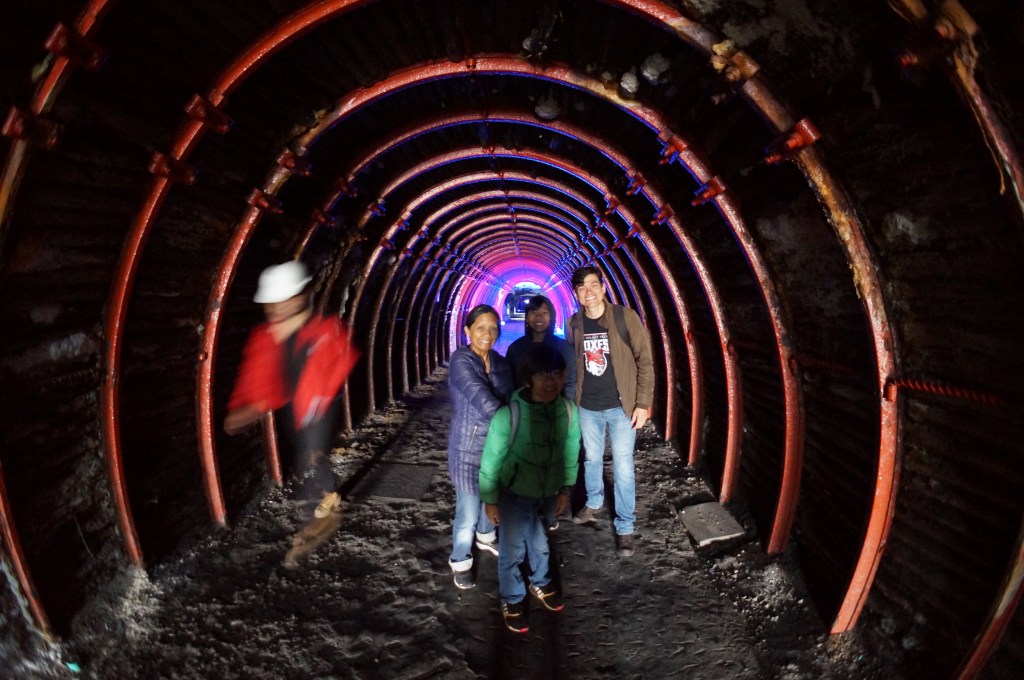
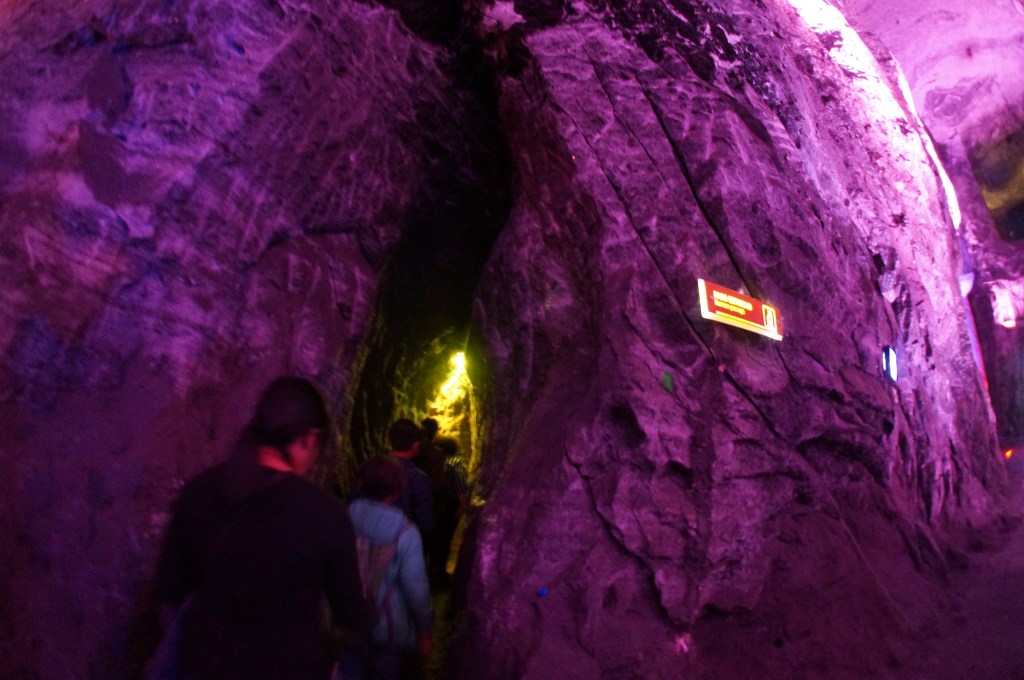
Not a great picture, but I did see lots of people wearing hard hats moving about. At first I thought I was watching miners descending to go chip at rocks for 16 hours but it turns out all the tourism-related employees wear hard hats as a part of their dress code.
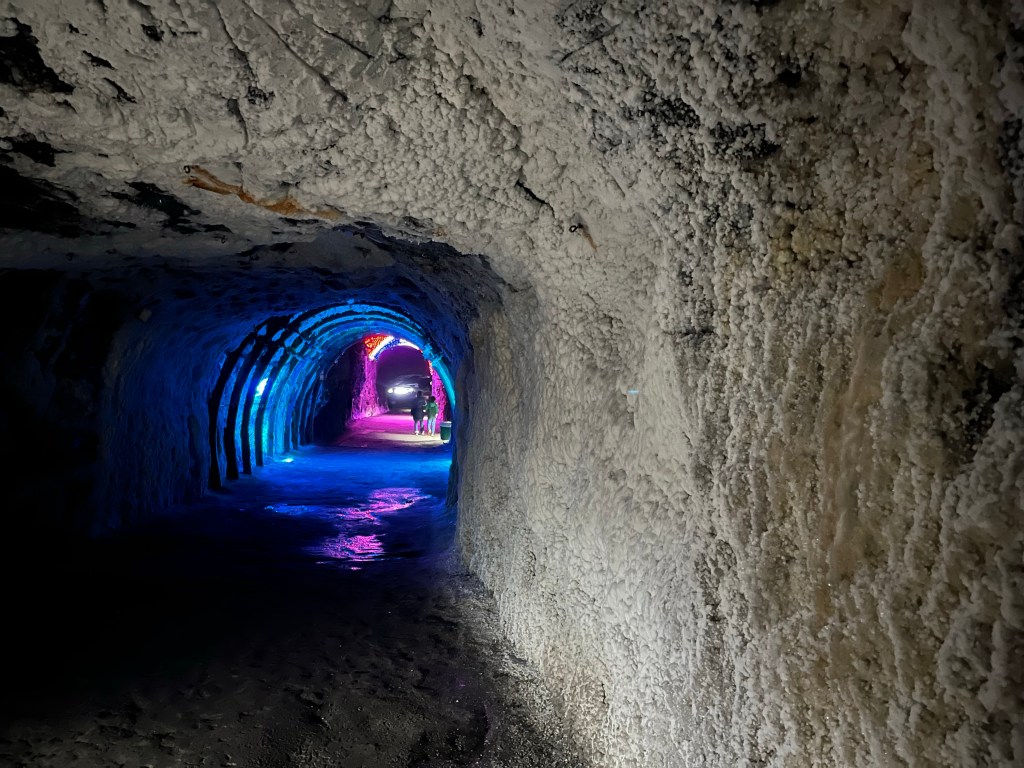
Salt has been historically mined in Bogota as a tradable currency. Much of the gold in the Gold Museum wasn’t mined but traded for using locally mined salt and emeralds.
And yeah, there actually is salt all over the walls. And there’s multi colored LED lighting to add an interesting and surreal feel to things. Is that the cathedral?
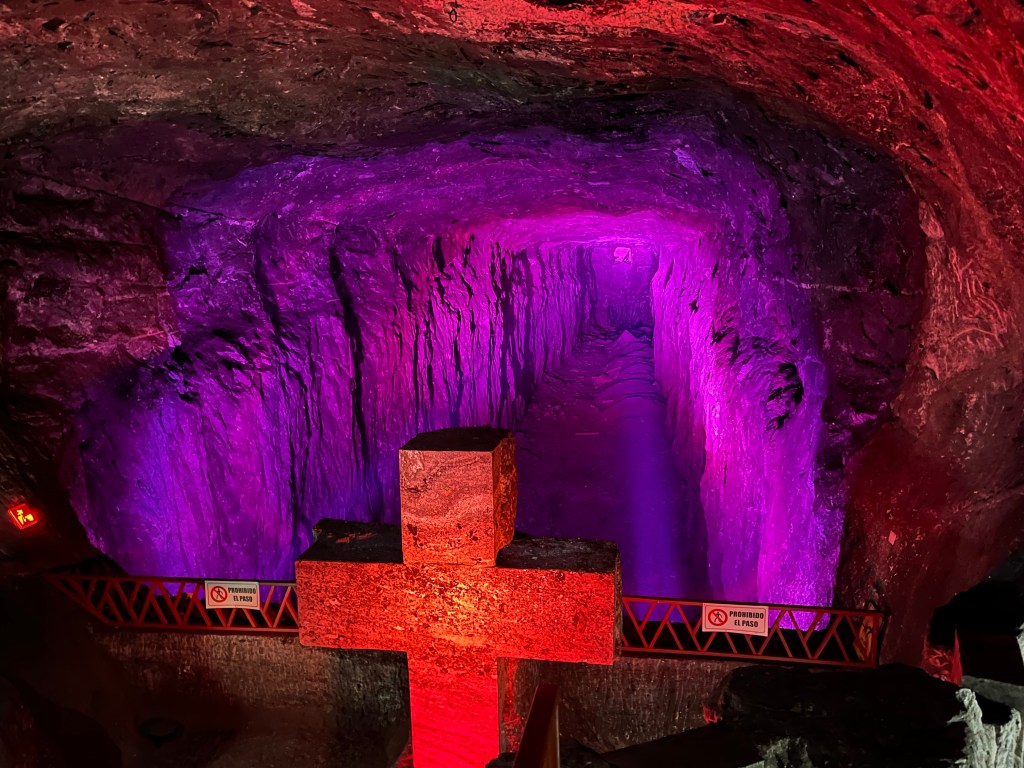
No. This is one of the 13 artistic depictions of the Crucifixion of Christ. They were built off of the main tunnel where salt was actually mined from in the past.
As you travel deeper into the earth, the tunnels to the right run deep and the tunnels to the left are far more shallow as they were a less productive rock yet still used for display.
There are many art installations to look at along the way as we headed 600 feet down.
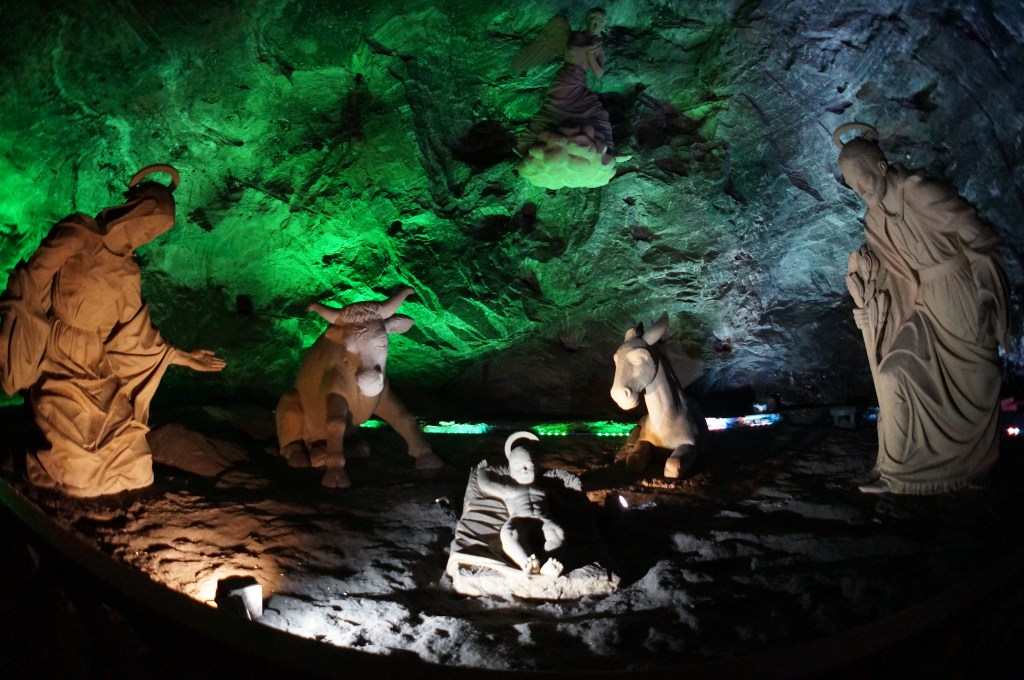
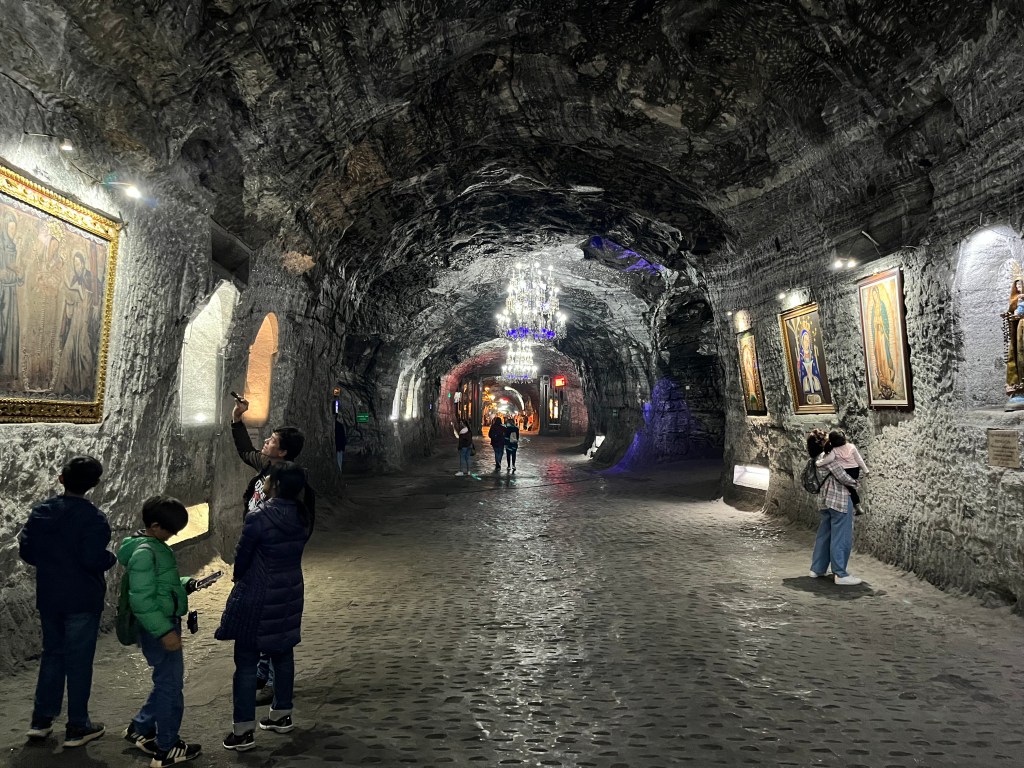
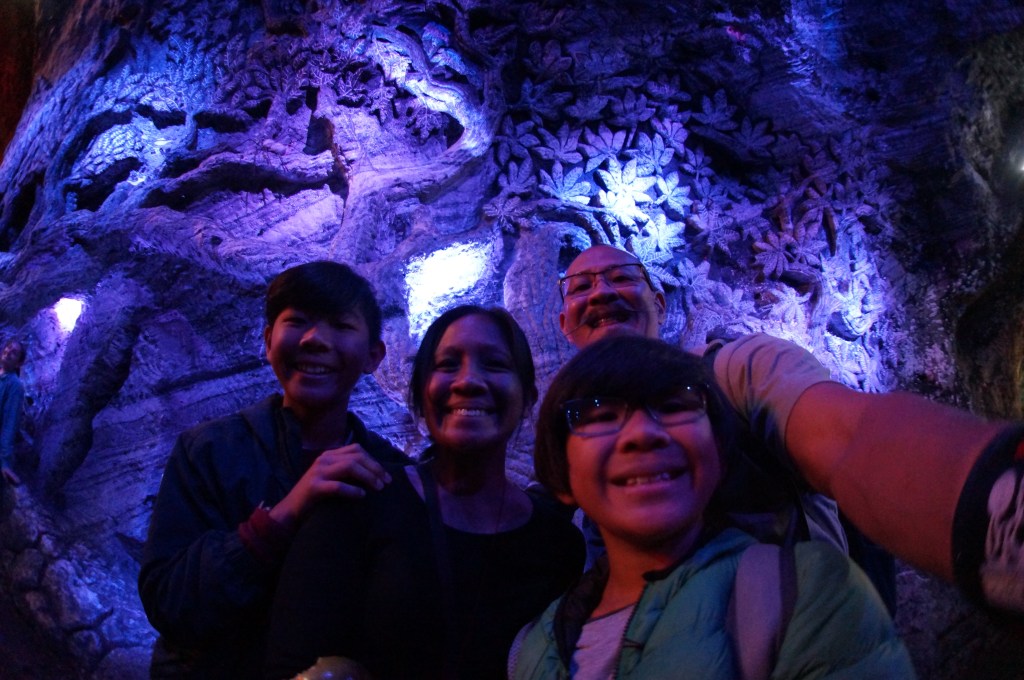
As you descend into the bottom of the publicly accessible area, the tunnels become cavernous rooms and you can begin to peer in from above. I felt like Short Round in it that one Indiana Jones movie-The Temple of Doom where the guy gets his heart ripped out.

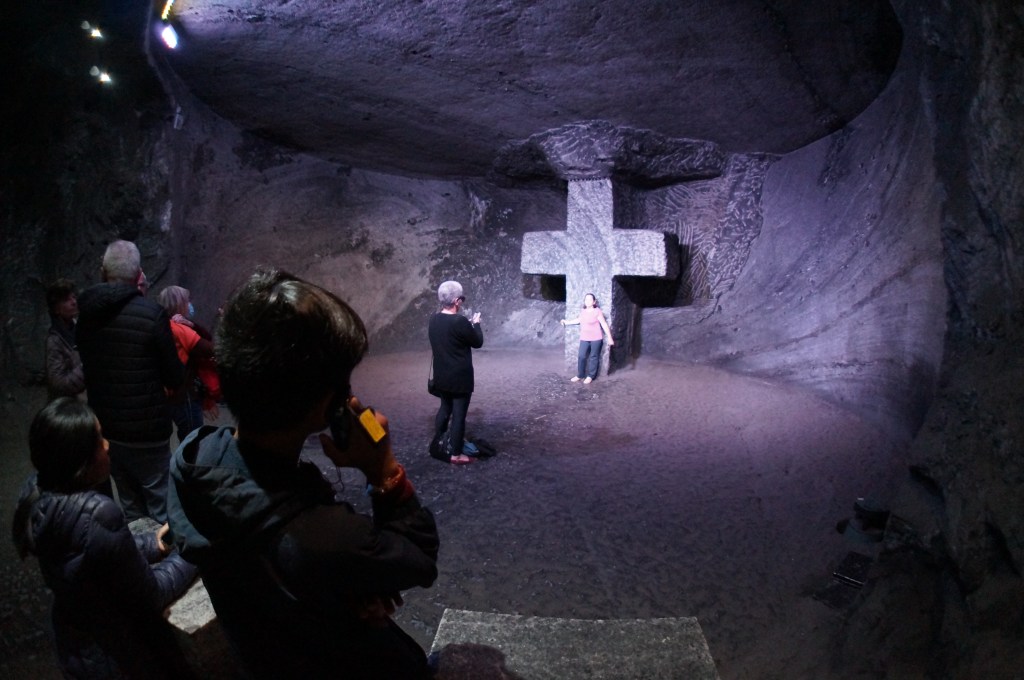
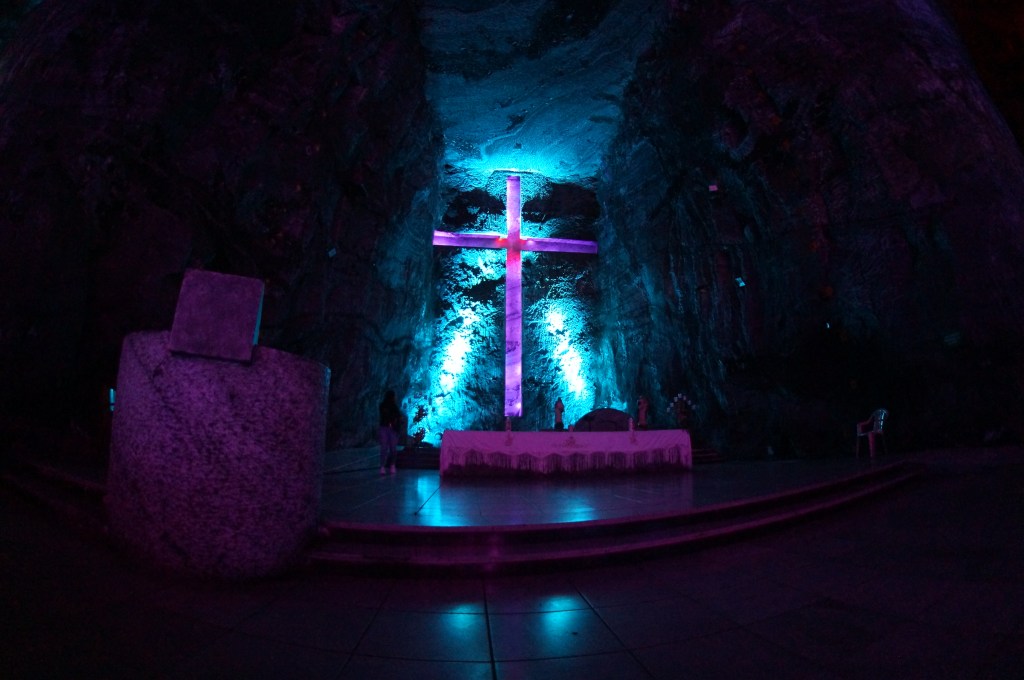
Here’s the world’s largest underground cross! Upon closer inspection, the cross is actually a negative, cut into the rock. The back wall was salty, btw. Don’t ask.
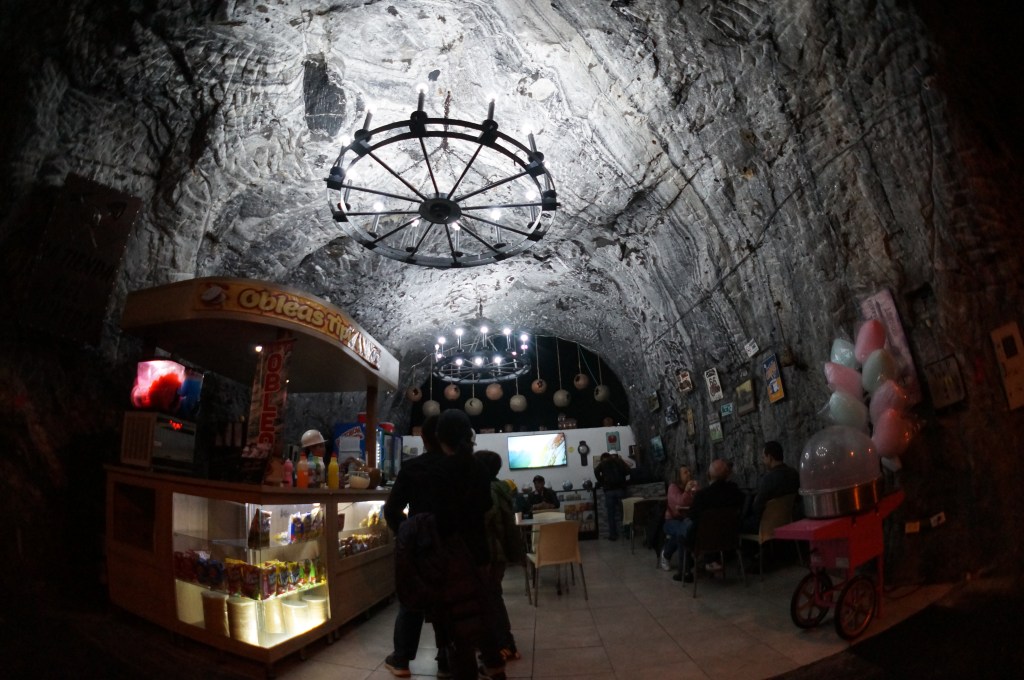
Stopped for a snack.
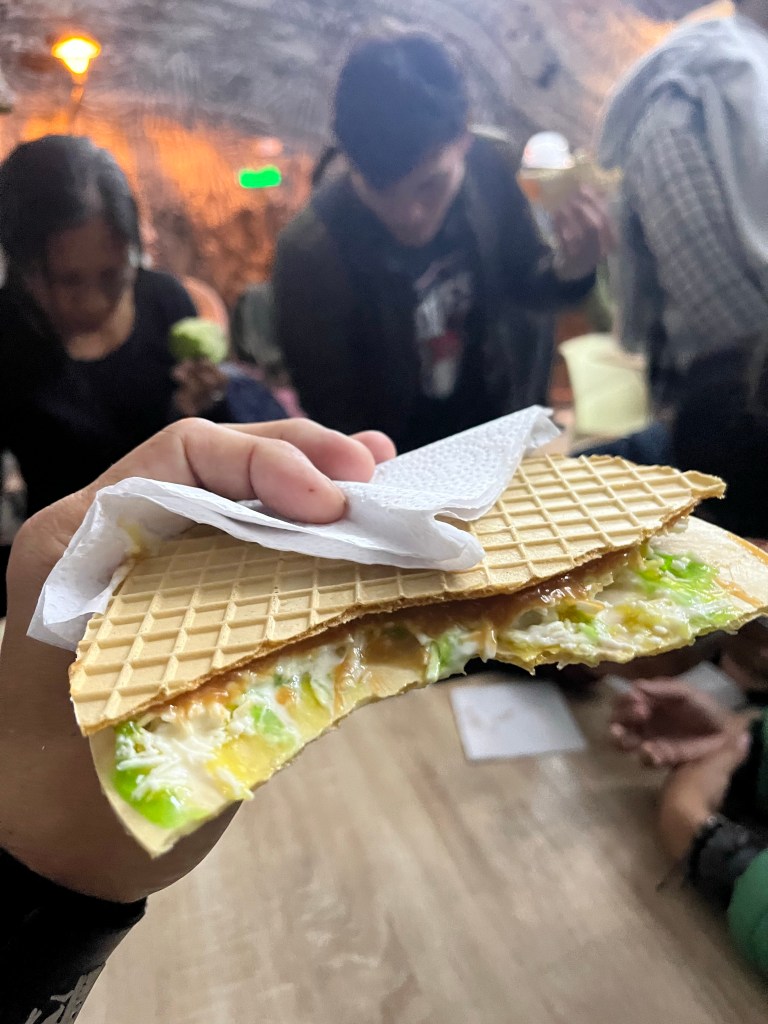
Note the cast-member miner garb. There was a plethora of super sweet fruit flavored sauces to add to the basic caramel and cheese obleas. Honestly I thought they’d have more salty stuff to eat, lol.
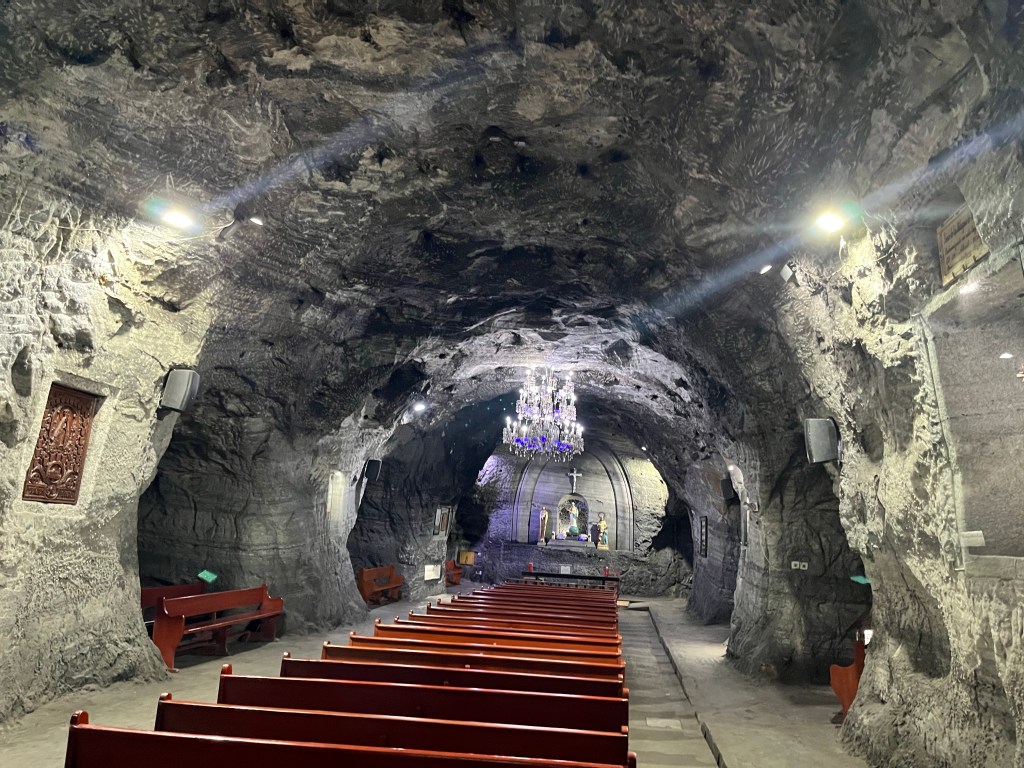
Finally, the church! A small church that is still used today to hold Mass. This is why we’re here.
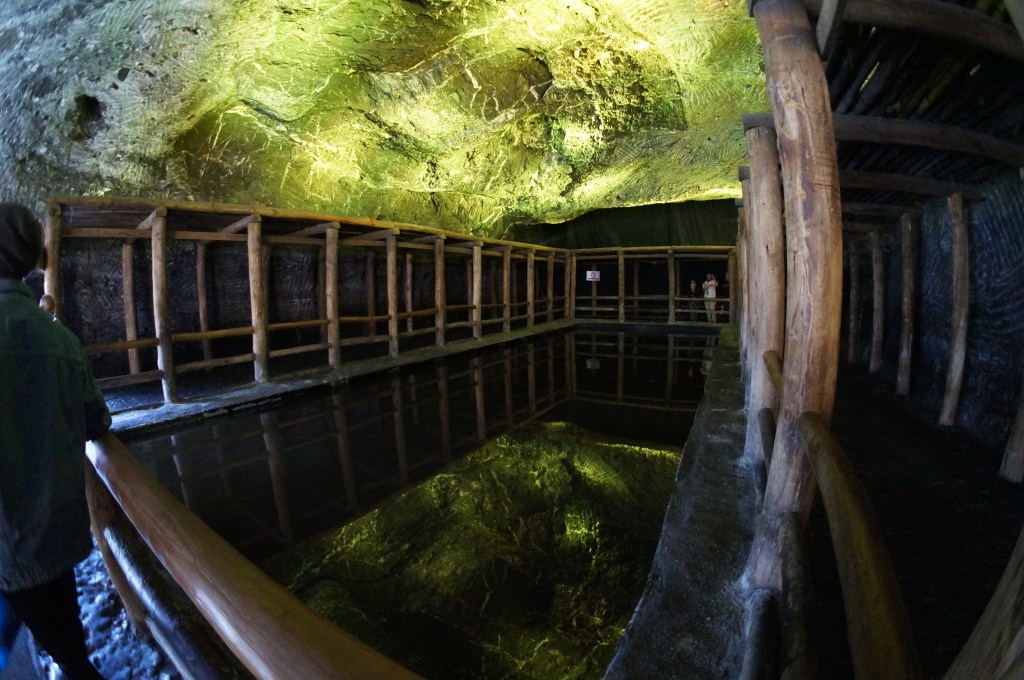
Here’s a reflecting pool, dense and saturated with salt. Also salty. Don’t ask.
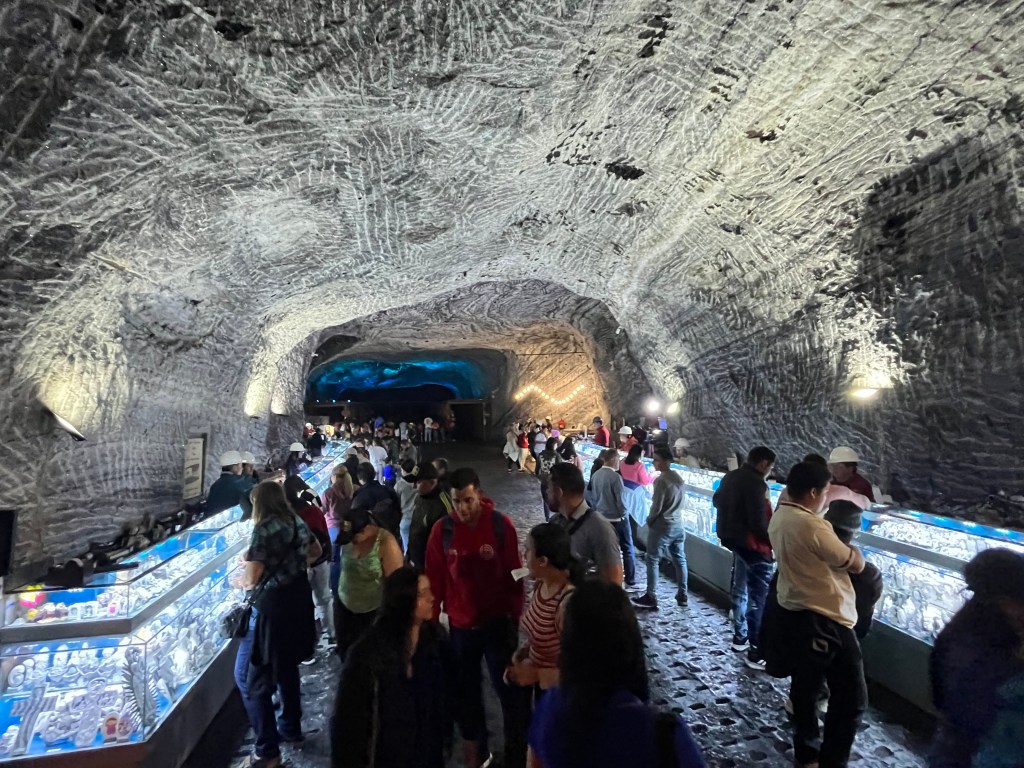
After seeing the church we walked around what Alvaro called “the mall,” stores selling souvenirs, snacks and jewelry. No Hot Dog on a Stick though the bathrooms were kinda cool, same exposed rock ceilings.
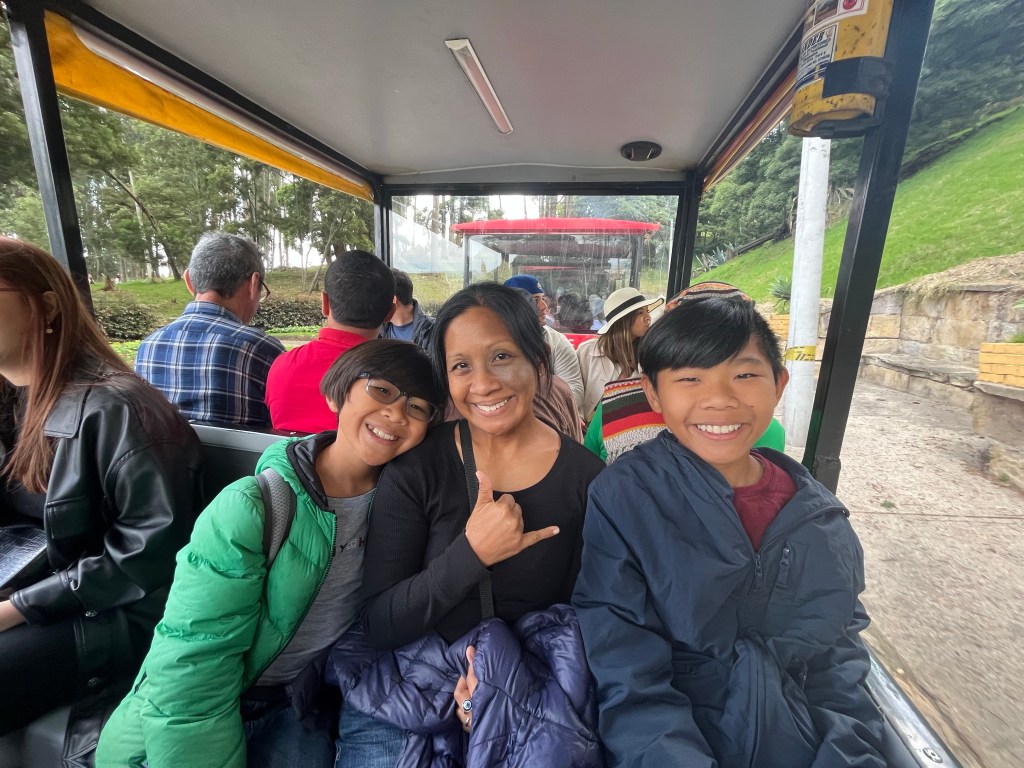
We eventually hopped a small train and trained it out of there. Nice that you can walk downhill into the mine and then be brought back up via train! No sweat.
My overall opinion? This was a really unique experience, easy on the body. The temp is cold and comfortable but I thought there were way too many fluffy distractions before getting to the chapel.
Mining still continues today beneath where the tourists visit and where the guides are wearing hard hats merely to look the part. Peace and respect.
7th Ave (Carrera 7) stroll
After the salt mine, we went back into the city at Seventh Ave and walked toward the city center.

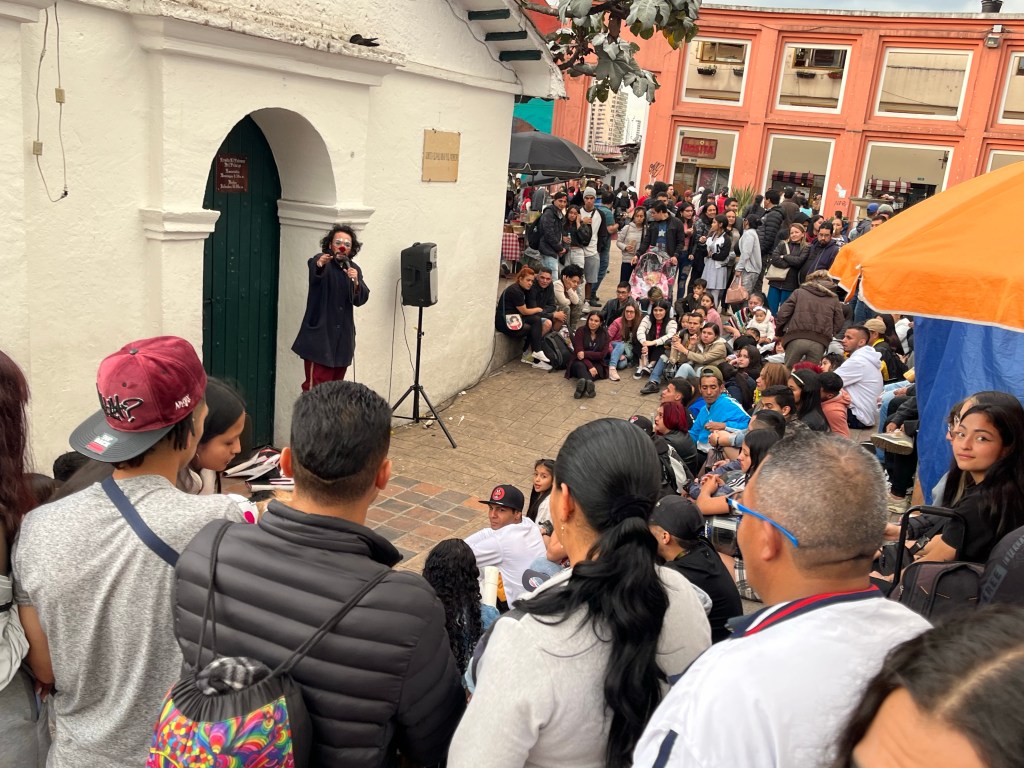
Along the way were stalls and street performers.
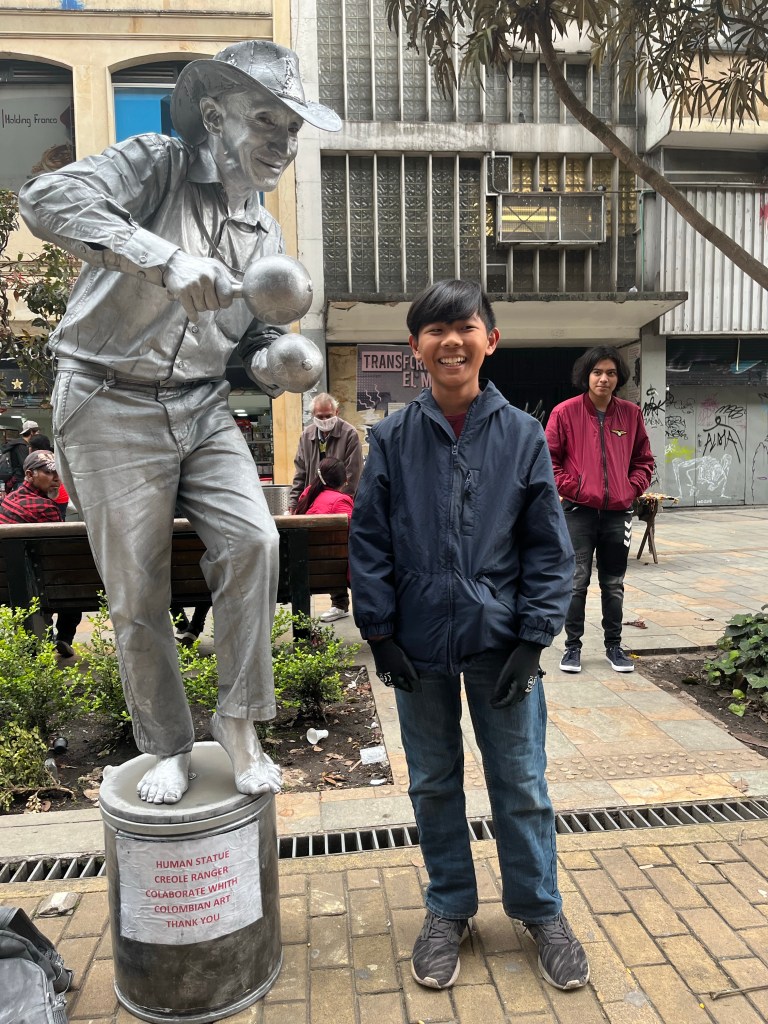
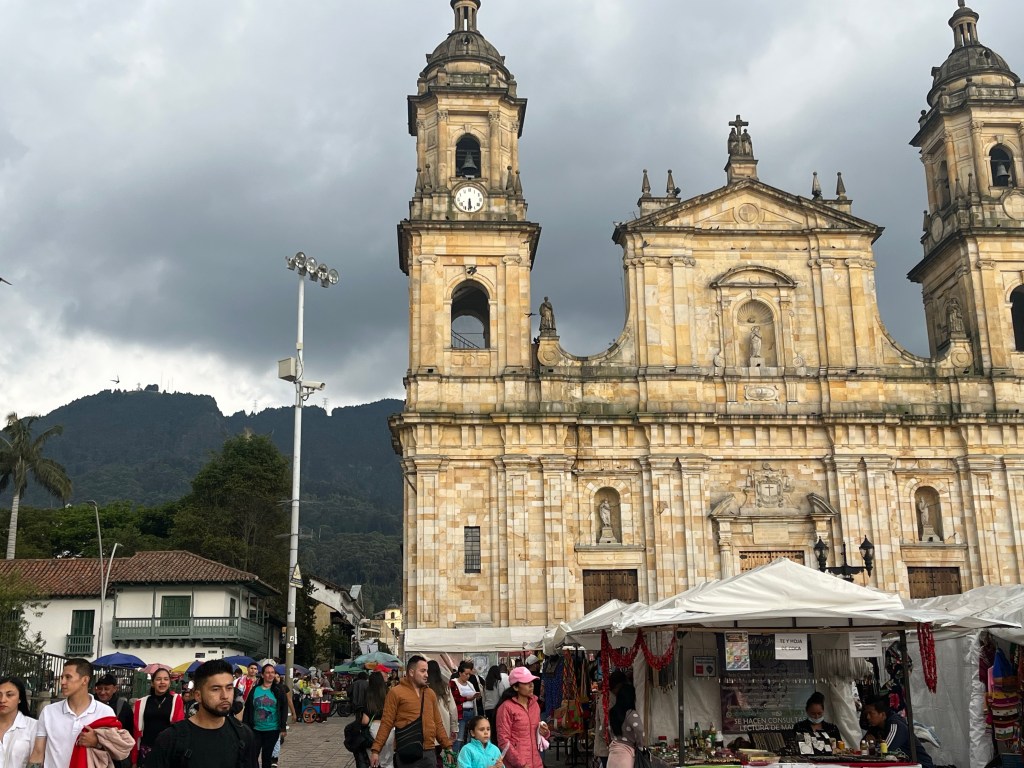
Near the end of our stroll was the town center. In the plaza were stalls set up selling trinkets and traditional foods.
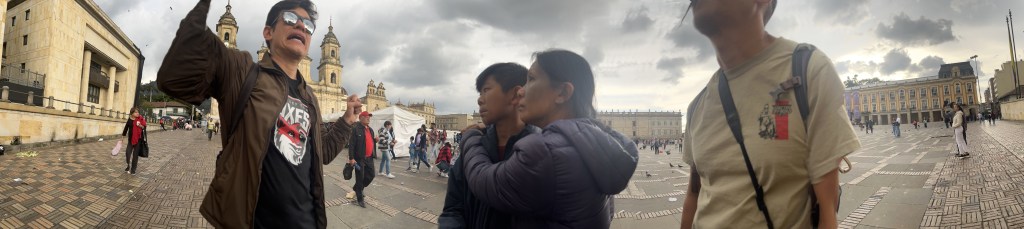
The little house on the left is the tiny (in comparison) historic home where Colombia and several other modern day countries decided that they were going to separate from Spain.
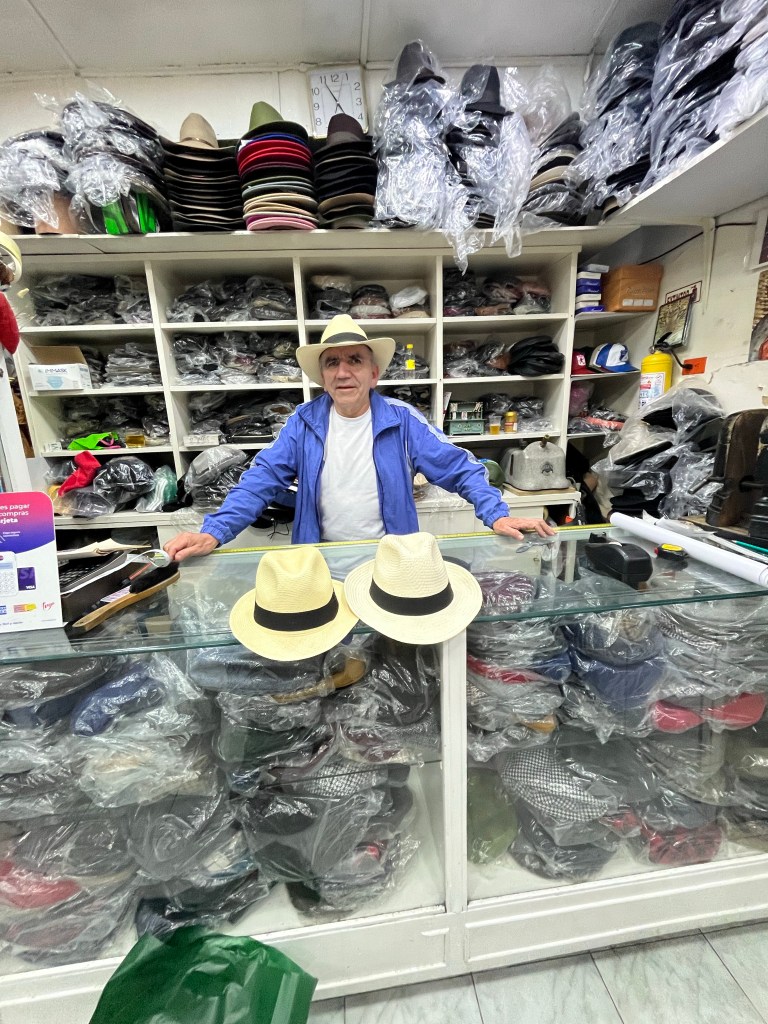
I mentioned to Alvaro that I wanted to find a hat shop and he did not let down. We visited the shop Almacén Galaad and picked up a few Colombian-made straw hats. This is his family shop.
Further toward the mountain we found this indigenous fellow selling wool Mochila bags on the street. Each bag has a theme woven into the print: snake for the strength of woman, stars for the creation of Earth, etc.
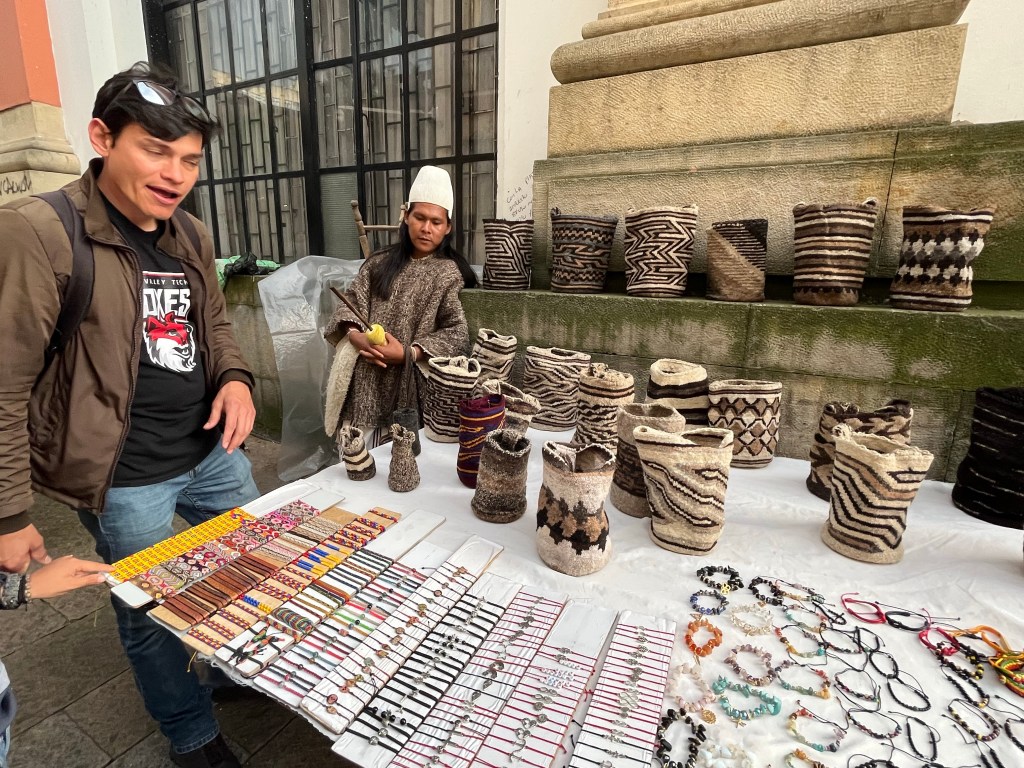
I was warned by our guide not to try the si hay chicha, a fermented corn drink that can wreak havoc on the gringo digestive system. Noted.

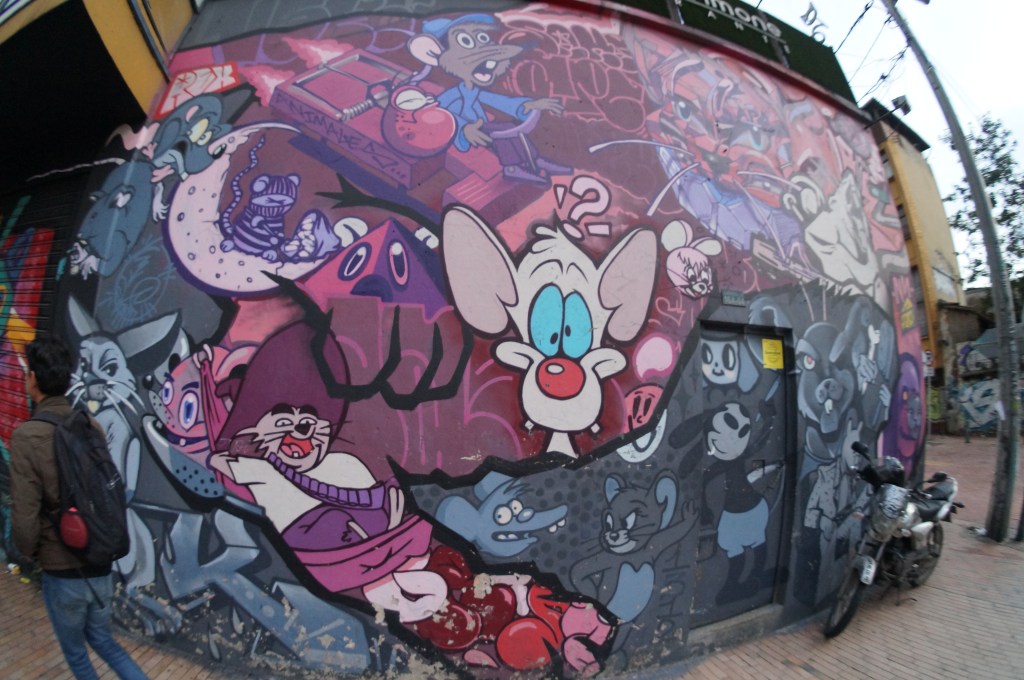
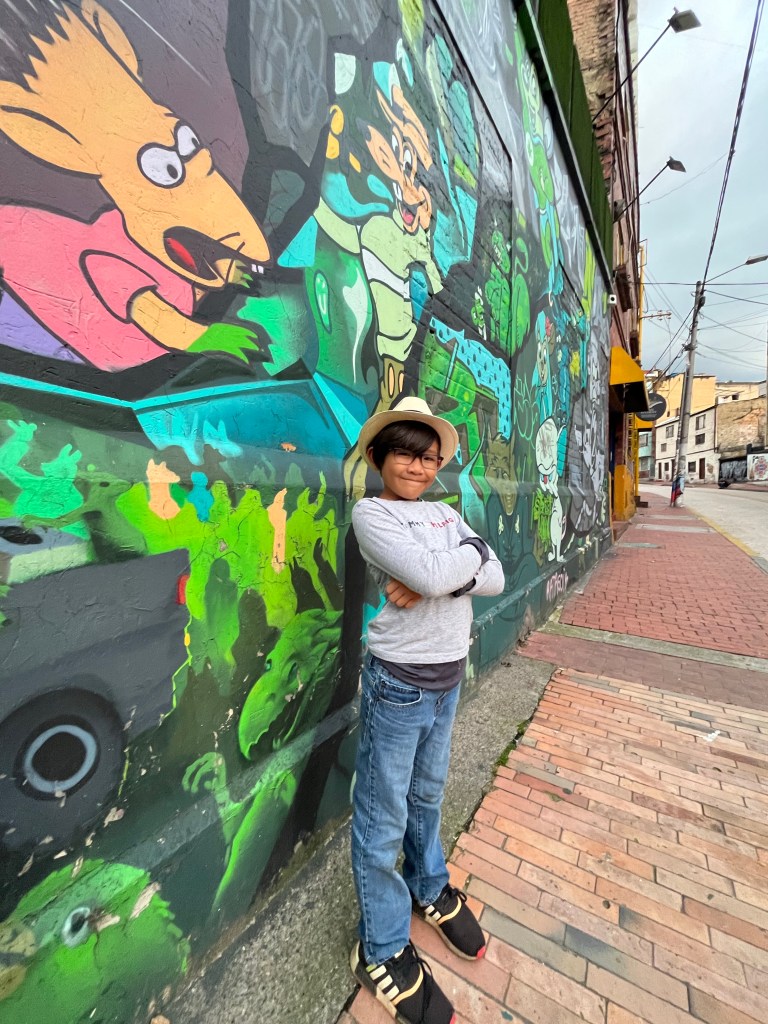
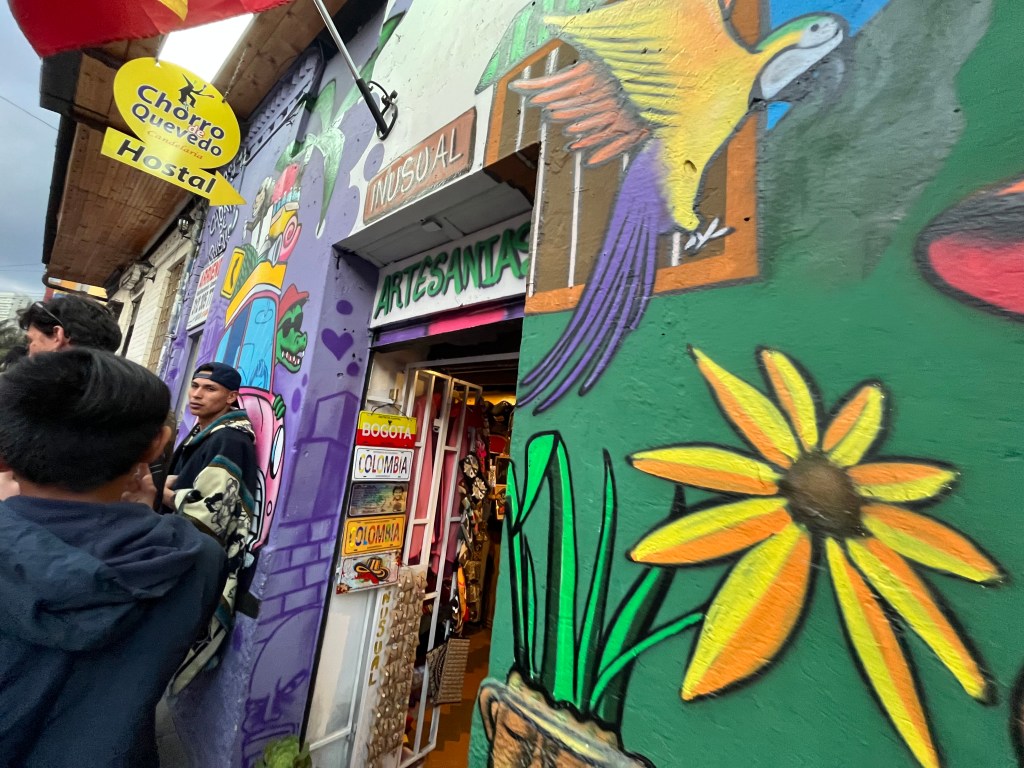
Near the top of the street is the graffiti area where wall art becomes more common and the young cool people are out socializing.
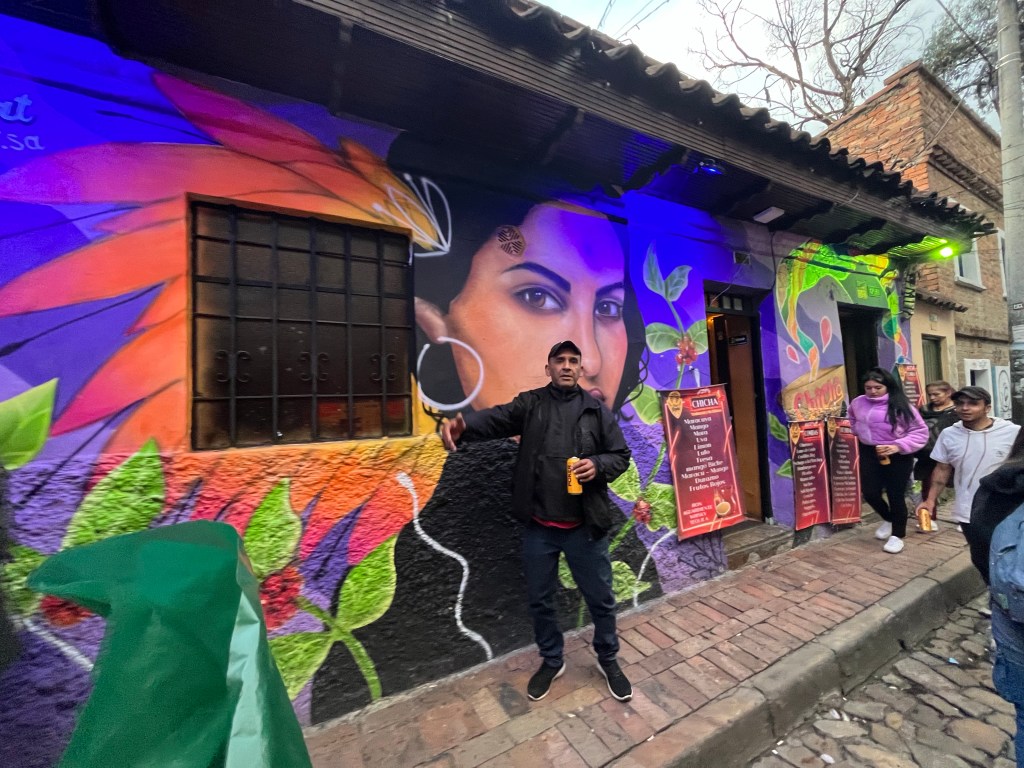
This guy’s story must be interesting!
Oddly enough, you can thank Justin Bieber for the plethora of street art, which became legal in Bogota around 2010.
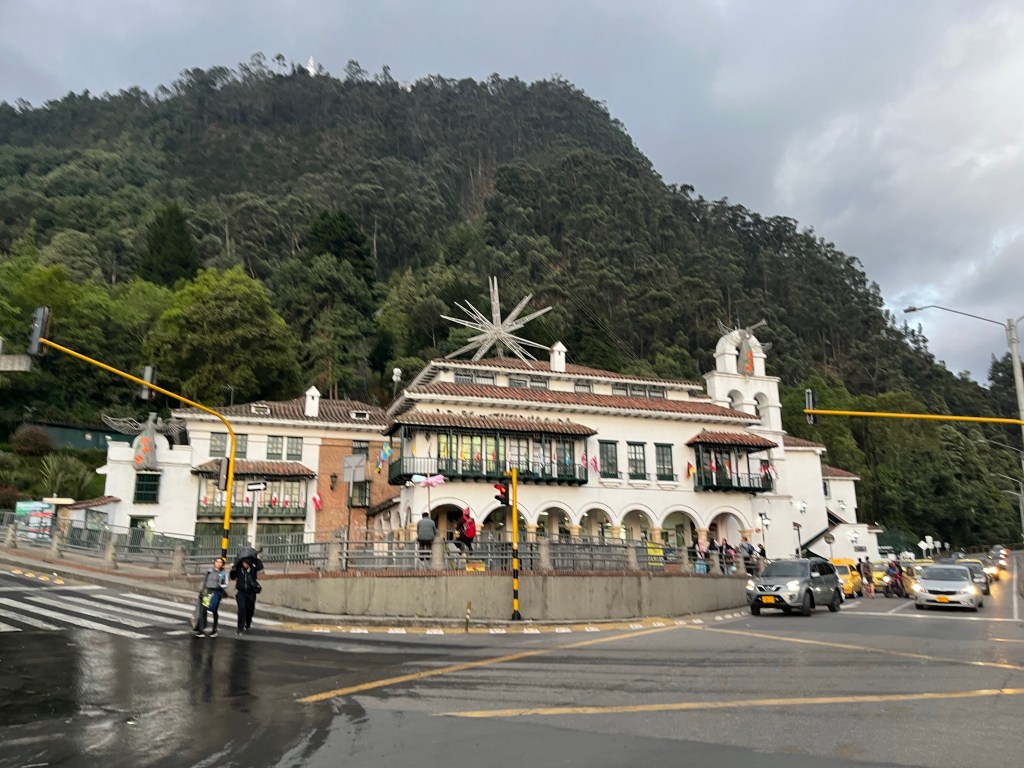
Unfortunately we weren’t able to go up to the Monserrate cable car since it was a holiday. Closed early. Boo. We’ll be back.
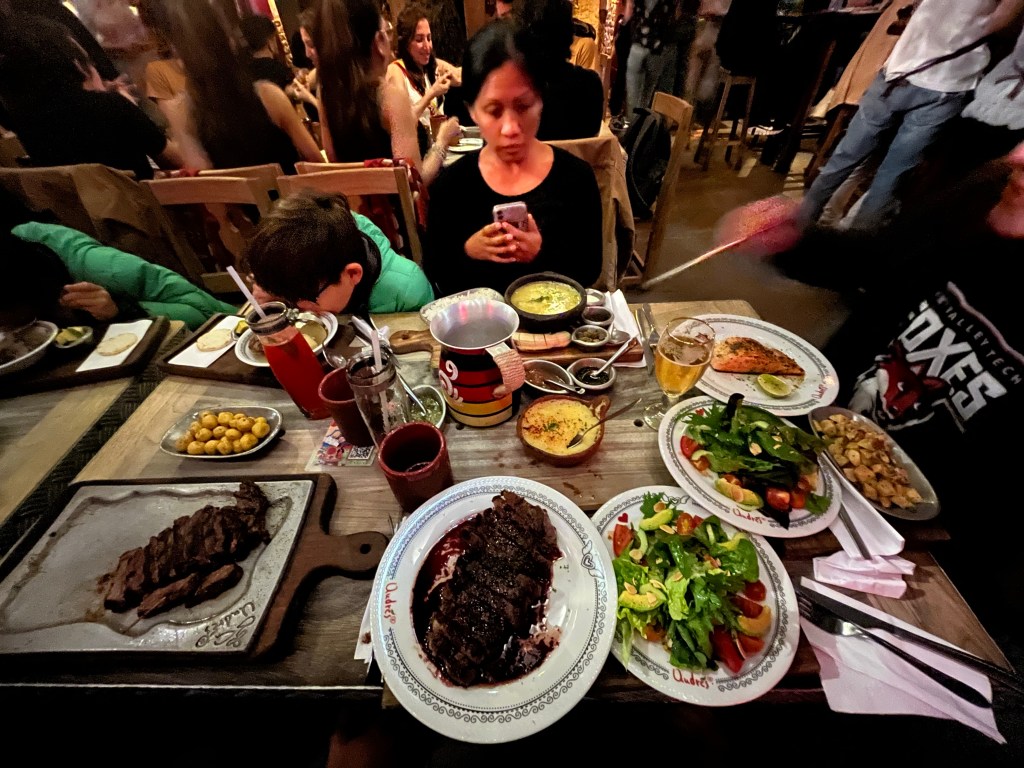
Off to dinner reservations at Andre DC, known more for its lively atmosphere than its food.
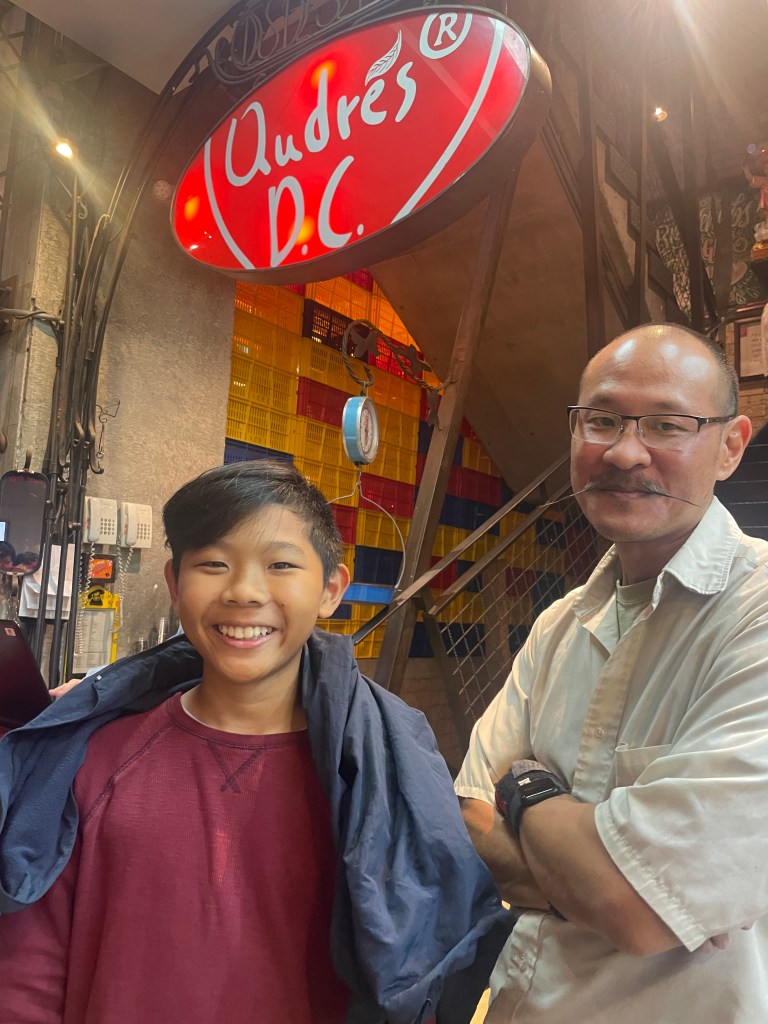
(In front of the cameraman)-an Argentinean steak. To its left, a New York steak, salmon-Alvaro’s favorite, a traditional corn chicken soup for June and Hudson’s face is in a beef soup with a chunk of meat. No complaints at all. Our server even said aloha to us when we left. This, I would have to say, ended up being our best meal in Bogota.
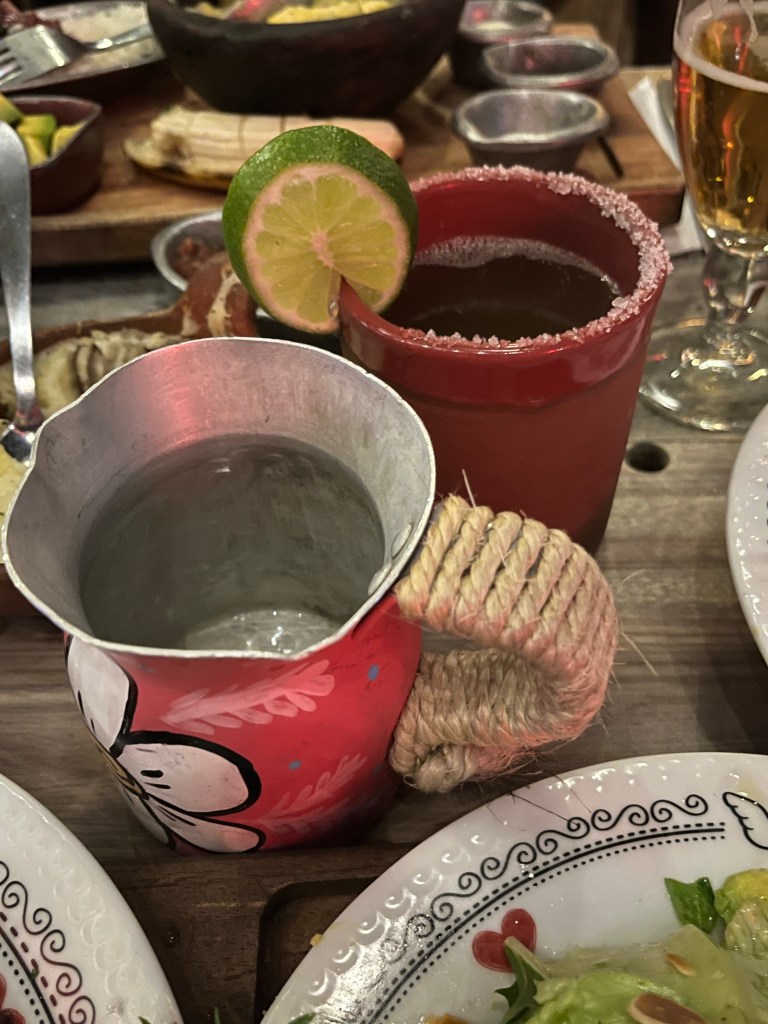
June and I had a few drinks. The first was the Colombian cocktail Refajo, which mixes beer/soda/aguardiente (sugar cane liquor).
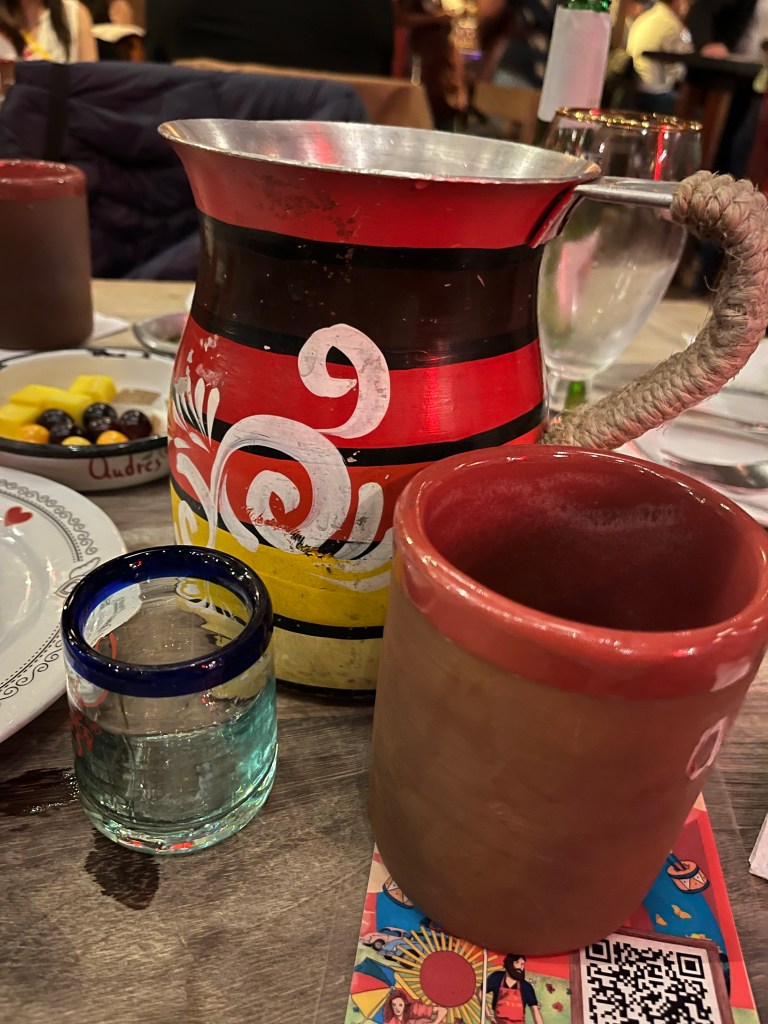
The second was canelazo aguardiente, a hot drink of aguardiente, cinnamon and lemon. It tasted like Christmas. Also gud.
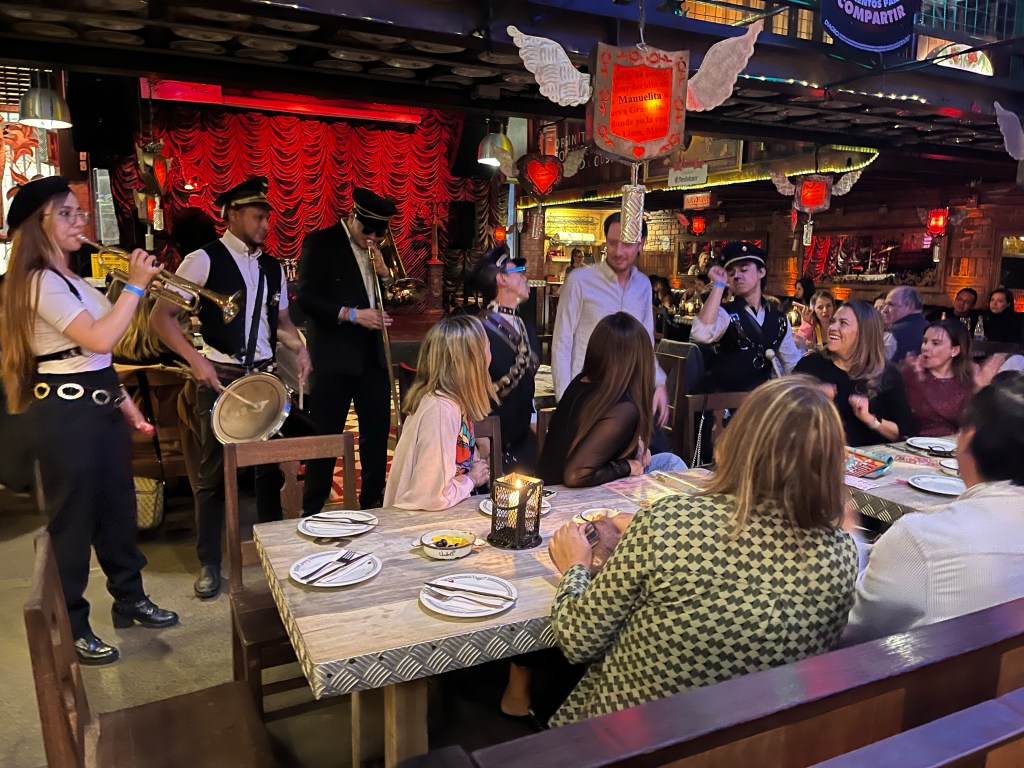
A group went around as the “K9 policia,” accusing random diners of criminal activity while dancing oddly suggestively. “Criminale!”
Please please please don’t choose me.
Ok we’re back at the hotel and mostly packed and ready to head out to the Colombian Amazon. Nighty-night!

I shall name you Justin Bier-beer
As if I haven’t already been relaxing this entire trip thus far. Yay to personal tour guides.
 The WOO family page