Wakey wakey, today will be our first full day in the Amazon! I woke up at 5:45 to look for hummingbirds and monkeys outside of our room and (surprise) ended up fishing at the pier. After a few minutes of catching nothing, I hung out in the kitchen with the cooks and guides while drinking fresh acai juice.
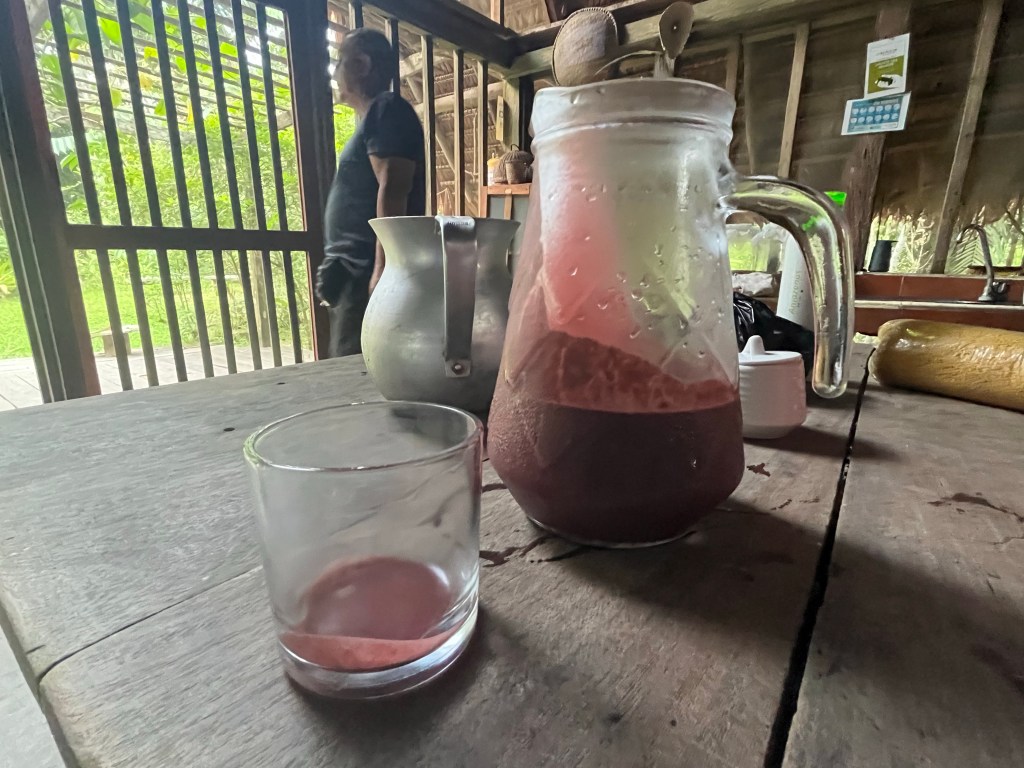
March and April are the acai months here. The berries are picked on property, soaked and smashed in hot water and then strained. Think Jamba without sugar. We sprinkled cassava granules (like grape nuts cereal), a bit of sugar and consumed.
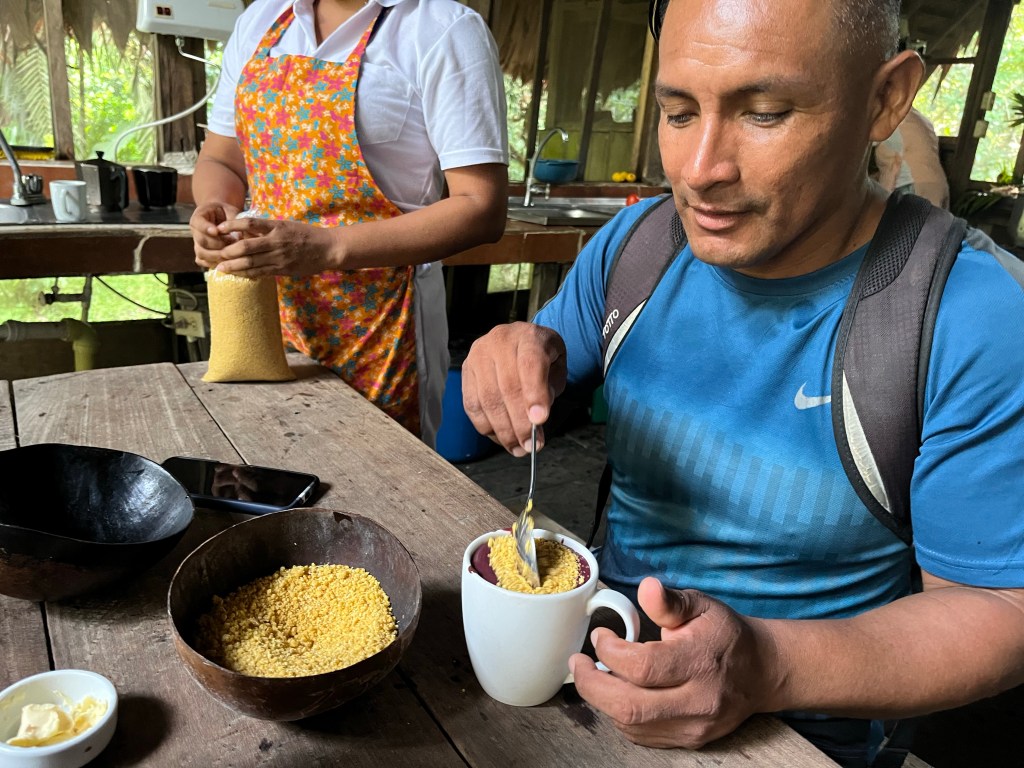
Here’s Elvis eating his breakfast acai. He’s a freelance guide passing through who will be doing a documentary on remote Brazilian indigenous tribes. He said that they’ll be hiring indigenous guards armed with shotguns to accompany them because the really remote natives are very hostile to outsiders.
He told me about his experience with an indigenous tribe ritual for outsiders where the natives peel back sections of the skin on your shoulder and insert frog poison under the skin. He described it as slowly not being able to breathe and you feel like you’re going to die. Intense! After acknowledging the power of nature the indigenous simply bathe your body in water to remove the poison from your skin. Primal.
After breakfast our camp was visited by a pack of small monkeys. They wanted bananas. The kitchen staff cut a bunch up for the kids (and me) to bring the little fellas closer.
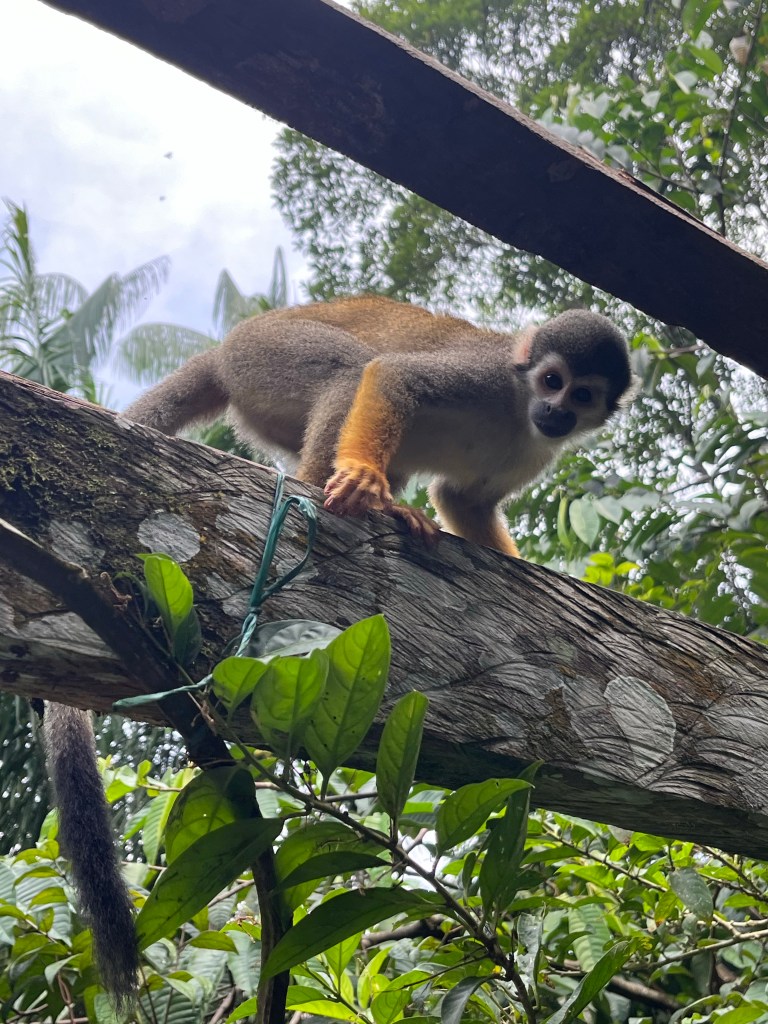
They would reach down from the branches and the trellis but not want to come all the way down. I tried to trick a few into letting me pet them but the monkeys weren’t having it.

The monkeys jumped from tree to tree at first then at a certain point they started fighting with each other and then after that I realized they had started humping each other in front of the kids. I wasn’t sure how to react and eventually they got tired of our lack of bananas and swung on out.
After the monkey circus we started our medicinal plant walk right from the lodge. It was very informative.
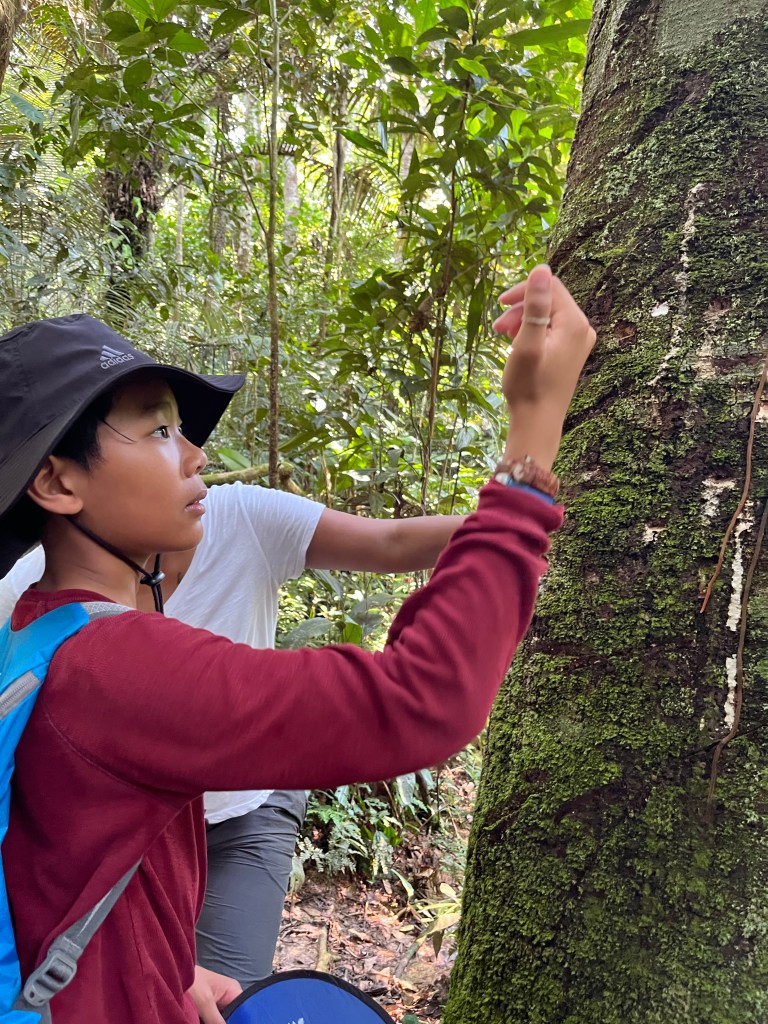
Here’s a rubber tree. The sap is used to make tires and all sorts of rubber items.
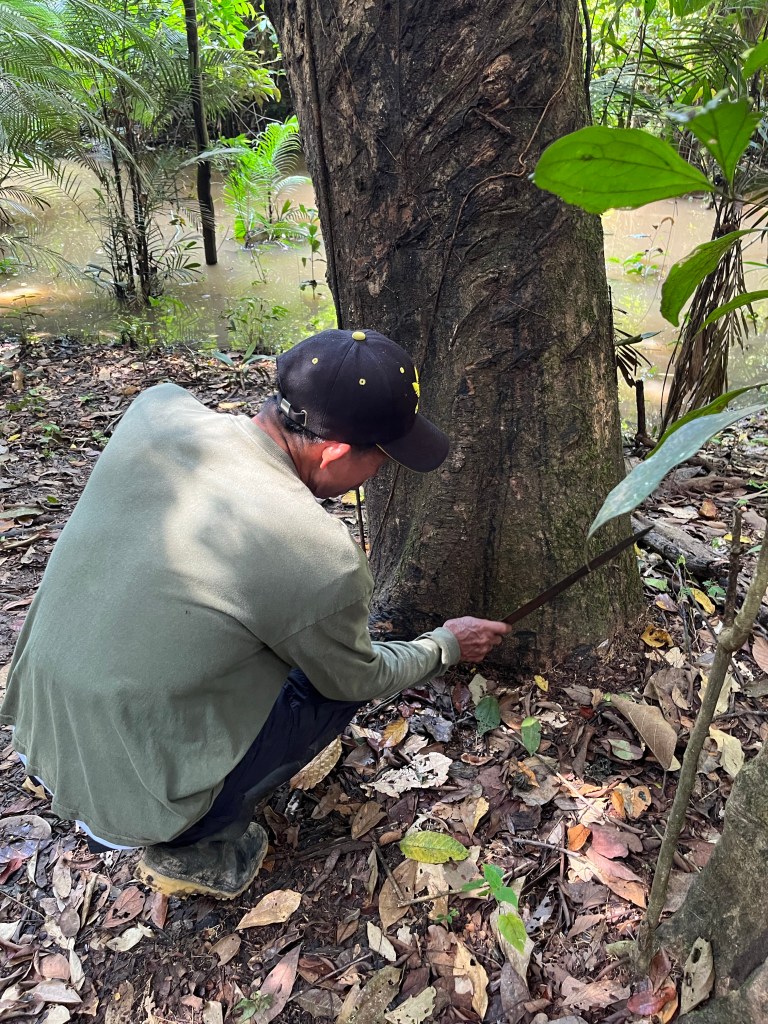
Our guide took the sap and drew rings on the kids palms. He told them to wait 10 minutes. After that he peeled the circles off and made rubber rings for the kids to wear. The final product felt a lot like dried rubber cement that you get out of a jar.

This tree is known as the Blood of the Bull. Its sap is red in color and is used to cure cancers, help with ulcers and is applied to C-sections post birth. Note-our guide mentioned that cancers are very rare with the indigenous people, probably due to diet and lifestyle.
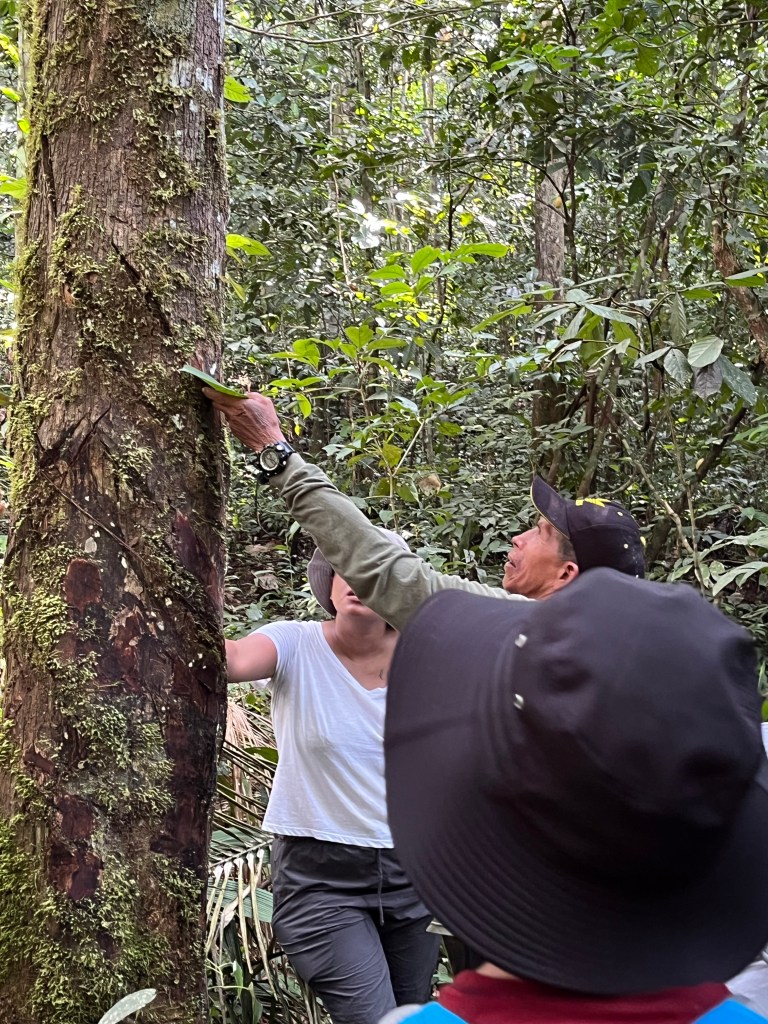
We put some on Hudson’s lip scar that he received from class camp from when he got whacked in the mouth with a big stick. Hey, why not? Ha you can see his rubber ring still drying on his palm. Few more minutes buddy.
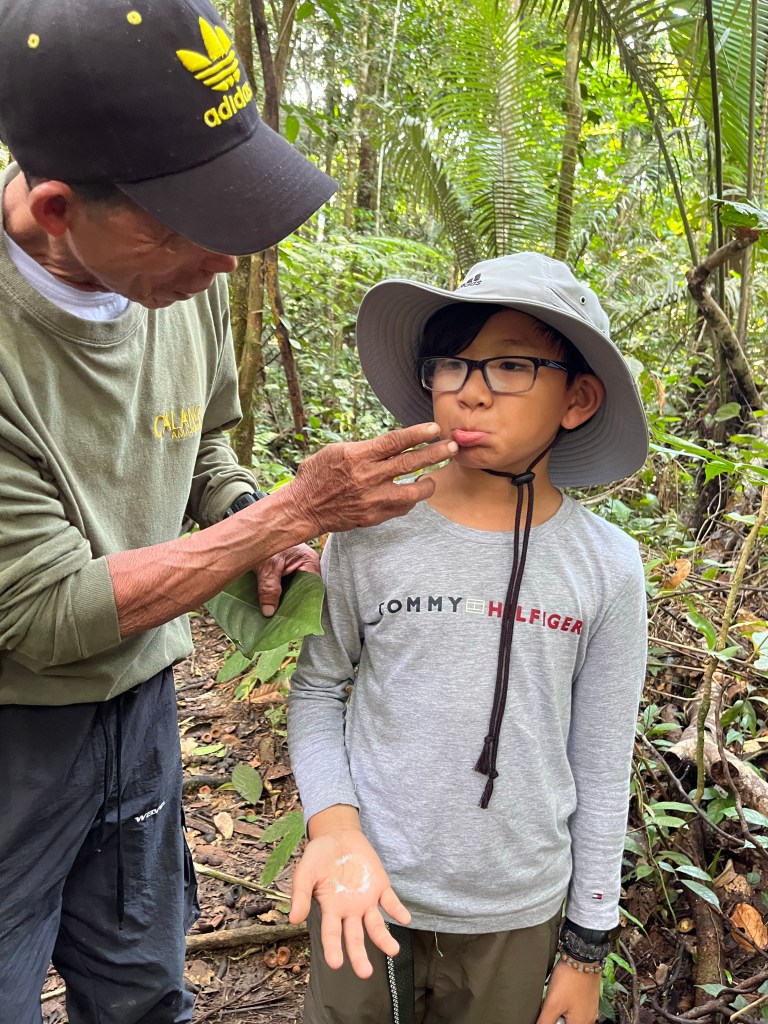
This is the Communication tree. It has thin webs on its trunk and can be used to “talk” to others by whacking the largest web you can find with a stick. It echoes loudly throughout the forest.
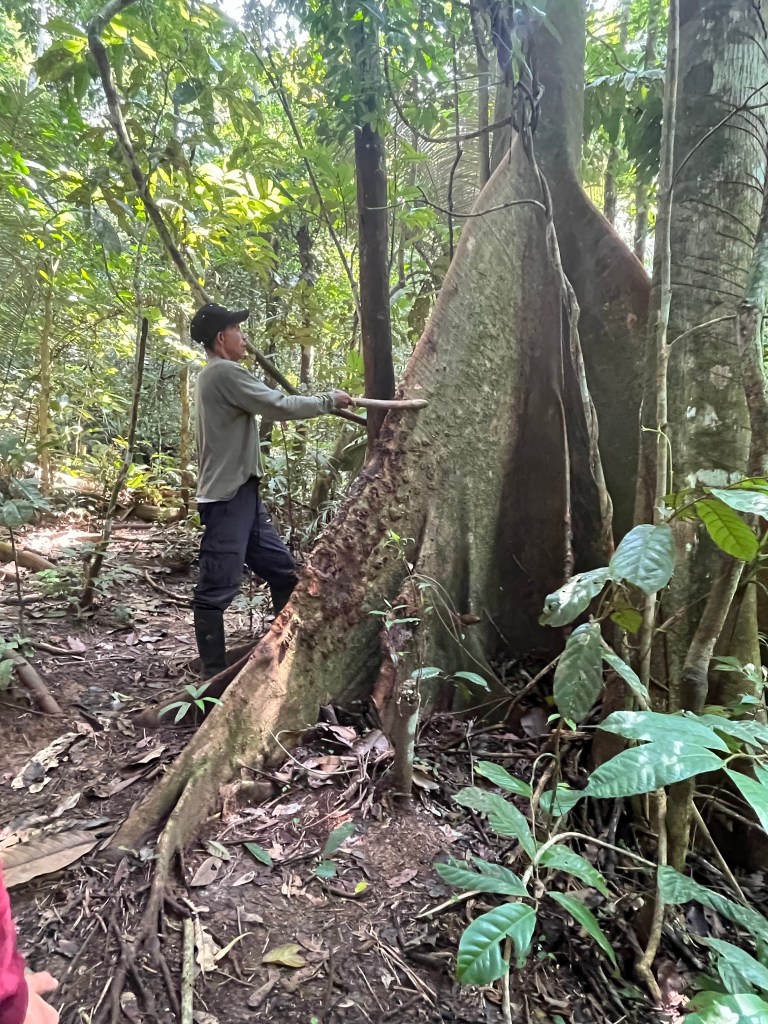
If you get lost you hit it three times as hard as you can and can be heard up to a kilometer away. The responding party will knock back three times meaning they are coming to help you.
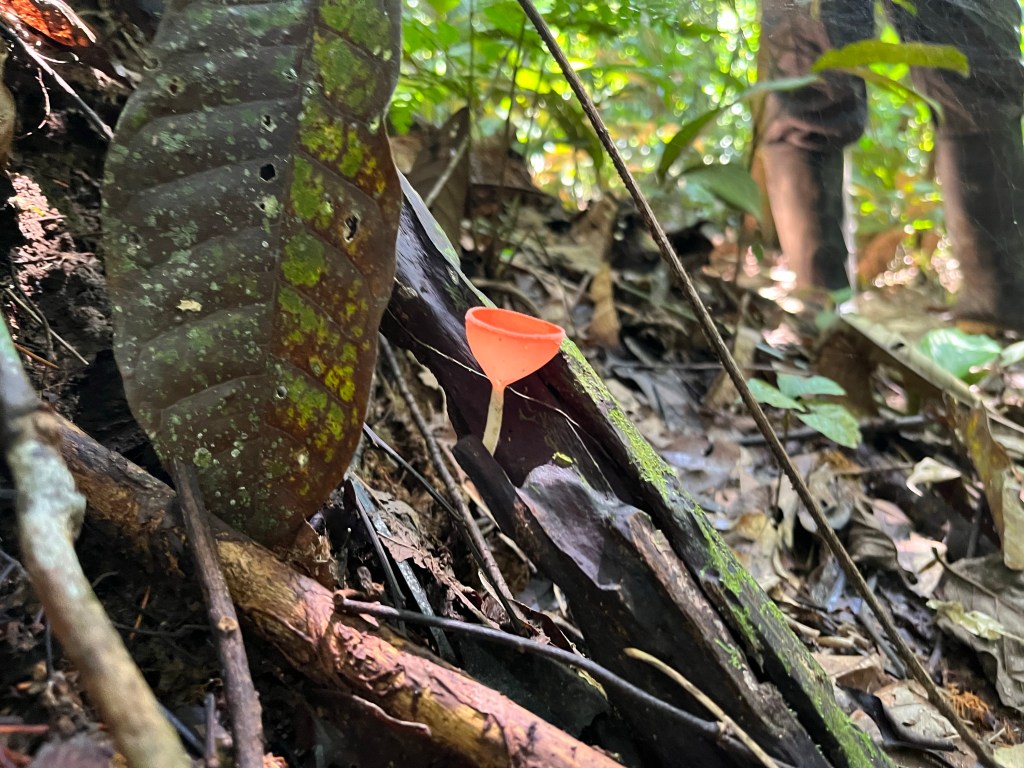
We learned about how mushrooms are connected underground and will communicate with each other and other plants. Mushrooms are key in the ecosystem as they help to decompose plant materials. This bioluminous mushroom with orange cap can glow white or yellow at night.
This plant is called Barbasco. Fishermen used to beat this plant at the water’s edge. It would make fish come up gasping for air where they’d then get harpooned. Now it’s illegal as it’s bad for the ecosystem and takes years for the waters to recuperate.
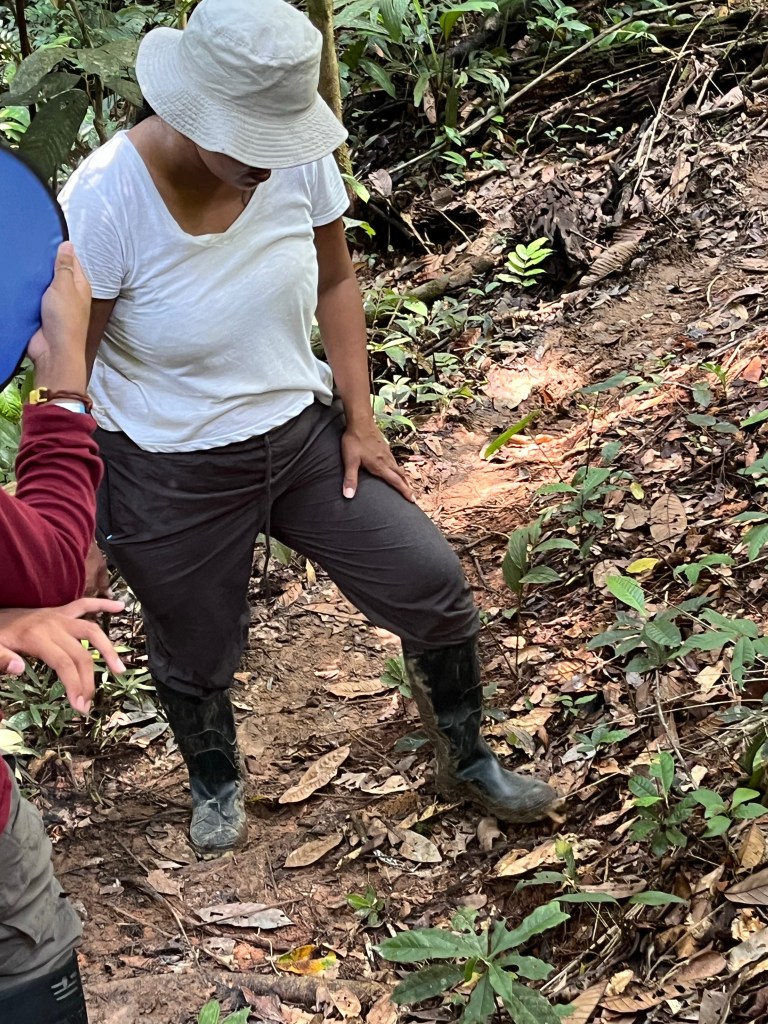
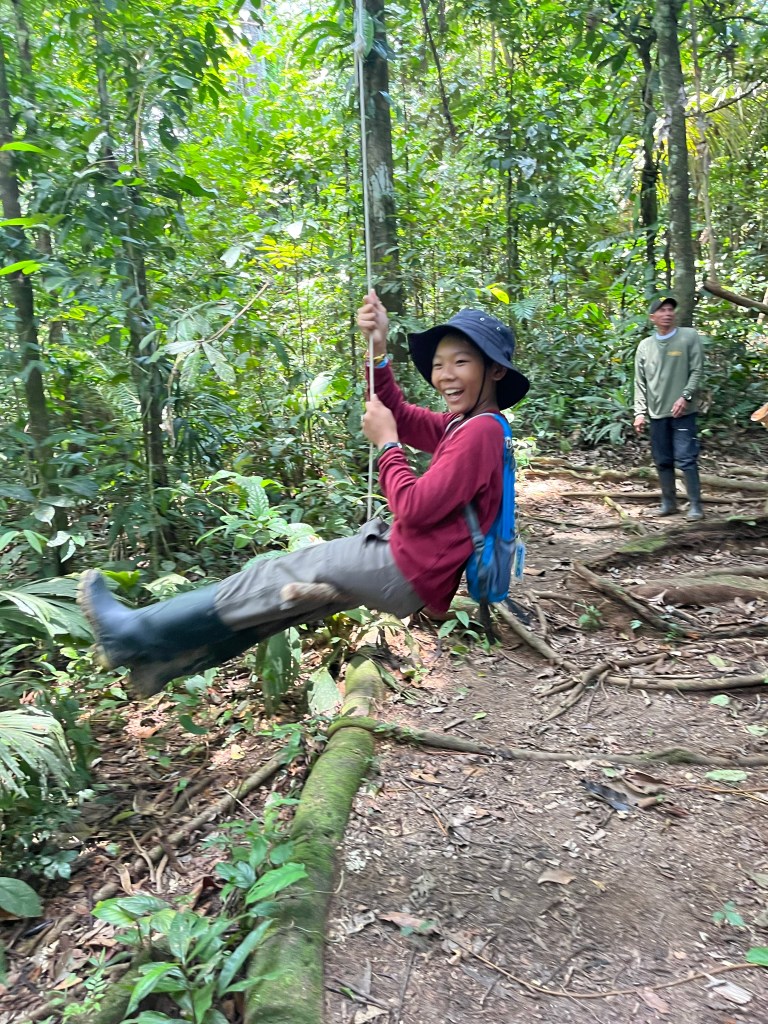
We stopped for a quick swing on a rope.
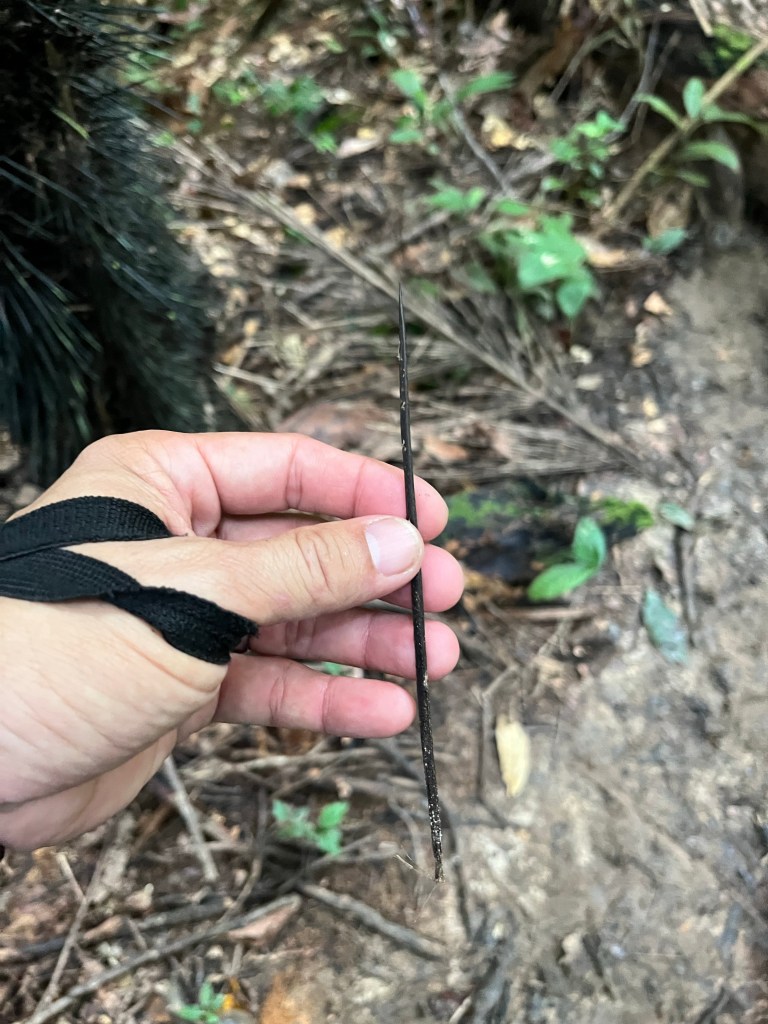
Here are the thorns used in blowguns for hunting small game. Although the Colombian indigenous don’t use blowguns, our guide ended up taking a long straight stick home with him.

And here these roots can be used as a food grater or as a weapon.

Here’s the mylanta tree, used to treat dysentery by coating the stomach. Know the name from your local drug store? Tasted exactly like it!
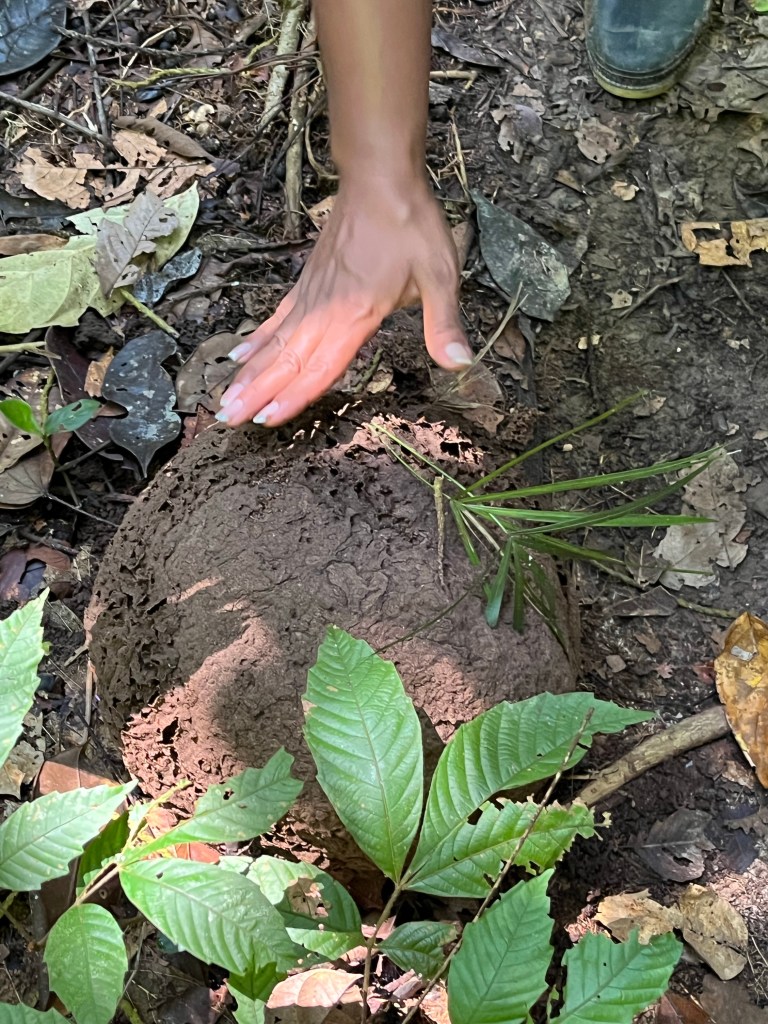
Both Pax and I ate ants off of this anthill. My one and only bug eating experience here. Indigenous hunters when out on the trail for several days will eat these for protein when food isn’t readily available. Just place your hand onto the nest, let the ants crawl on and enjoy. They were crunchy and tasted a bit like pine wood.
We walked for 2.5-3 hours roughly in one direction, stopping every so often to talk about a plant or tree. When we finished we were at a river’s edge and again I imagined I was in an Indiana Jones movie. I felt like angry natives were going to chase us out of the woods with spears and arrows as we leapt onto our escape craft.
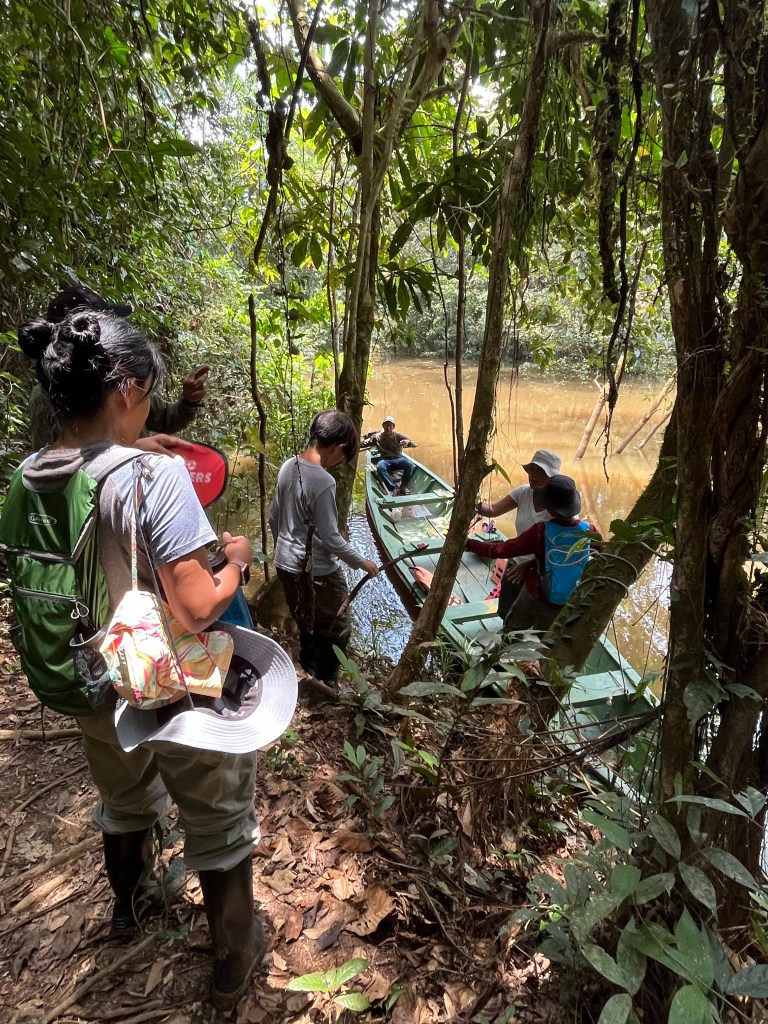
Hit it, Short Round!
There’s that blowgun stick on the boat.
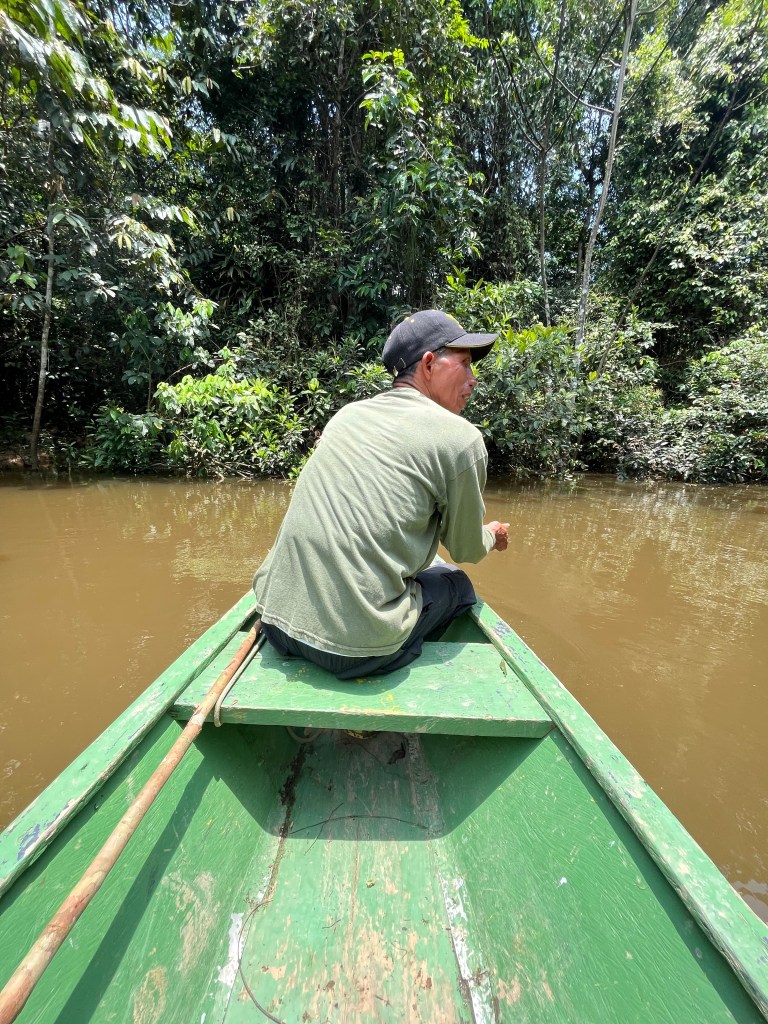
On the way back we stopped in a small tributary of the Amazon and fished for piranha.

June got a bite but the fish came off. I felt a bite and my “pole,” which was basically a stick from a tree, ended up crackling and snapping. I grabbed the line end of the two halves afterward but it was too late. Fishie bye bye. That’s my “one that got away” story.
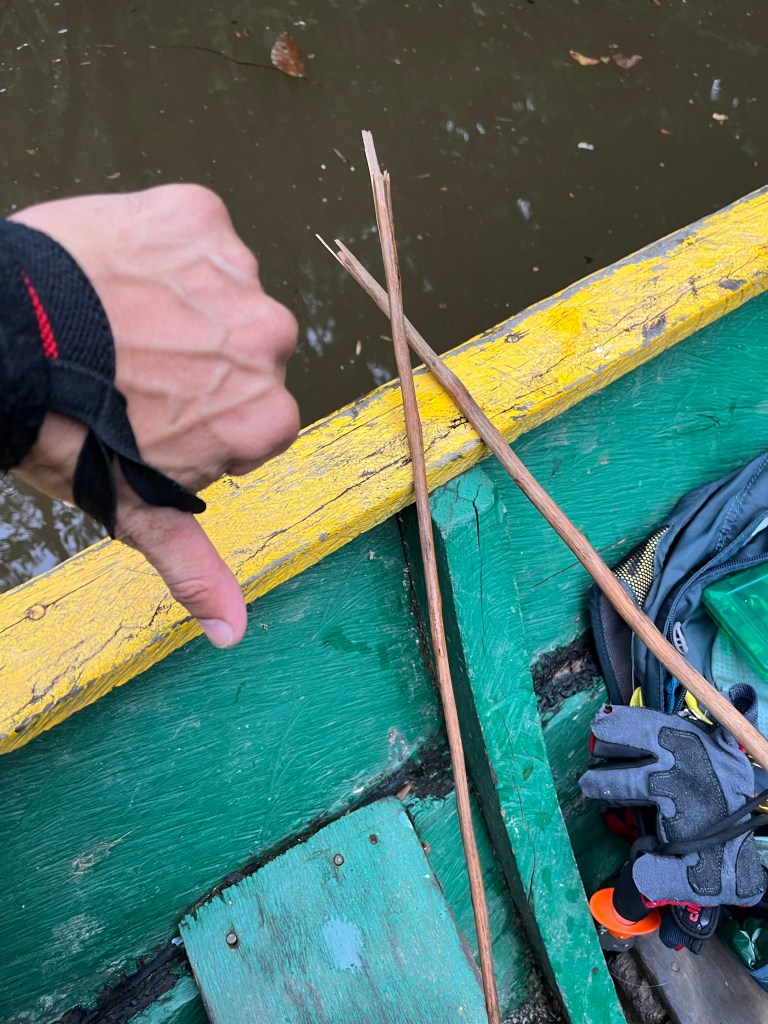
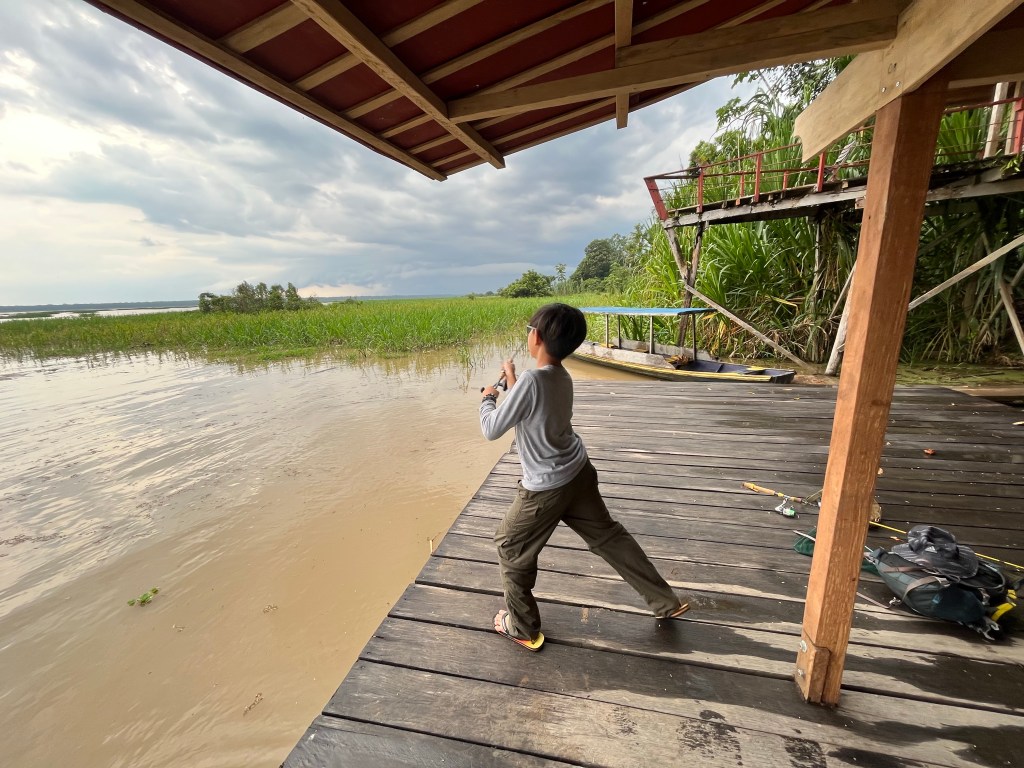
…And some last ditch fishing back at the pier.
Although we didn’t catch anything, we got to return to a camp dinner of -you guessed it-fish (steamed in leaf).
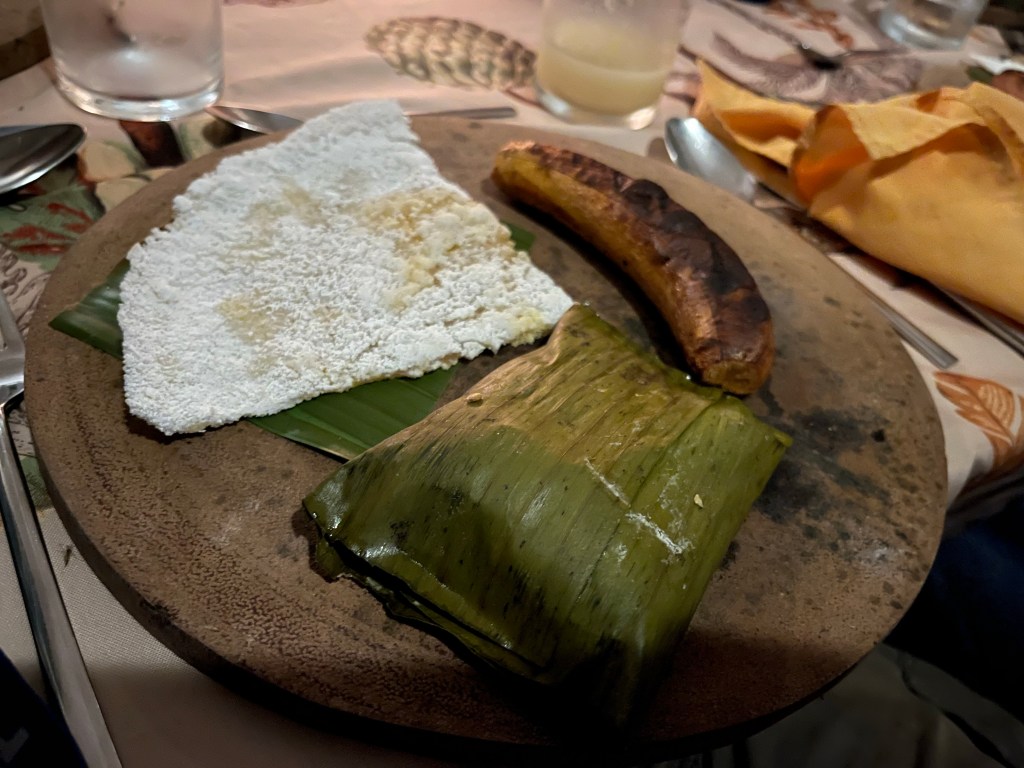
That’s cassava tortilla top left and a grilled plantain on the top right.
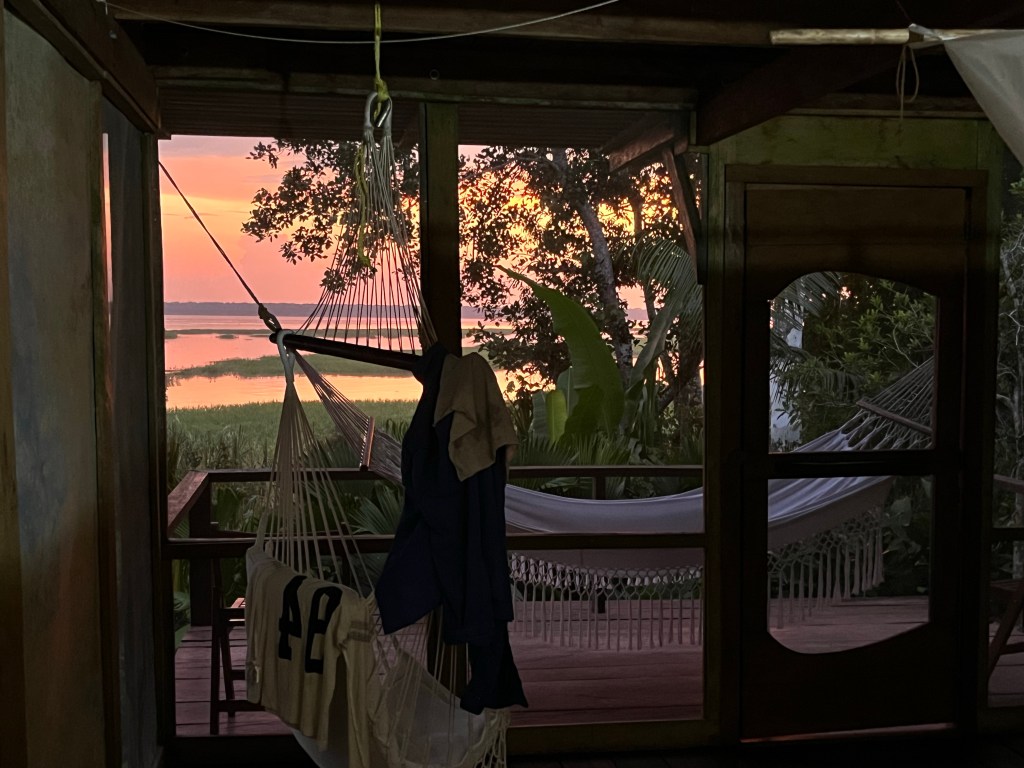
The clothes do not dry well here with the high humidity. Also, although it’s kind of hard to see, on the very left is a papery wall covering. It is mushroom paper made in the woods.
Goodnight city slickers!
 The WOO family page